
Last updated October 16, 2026
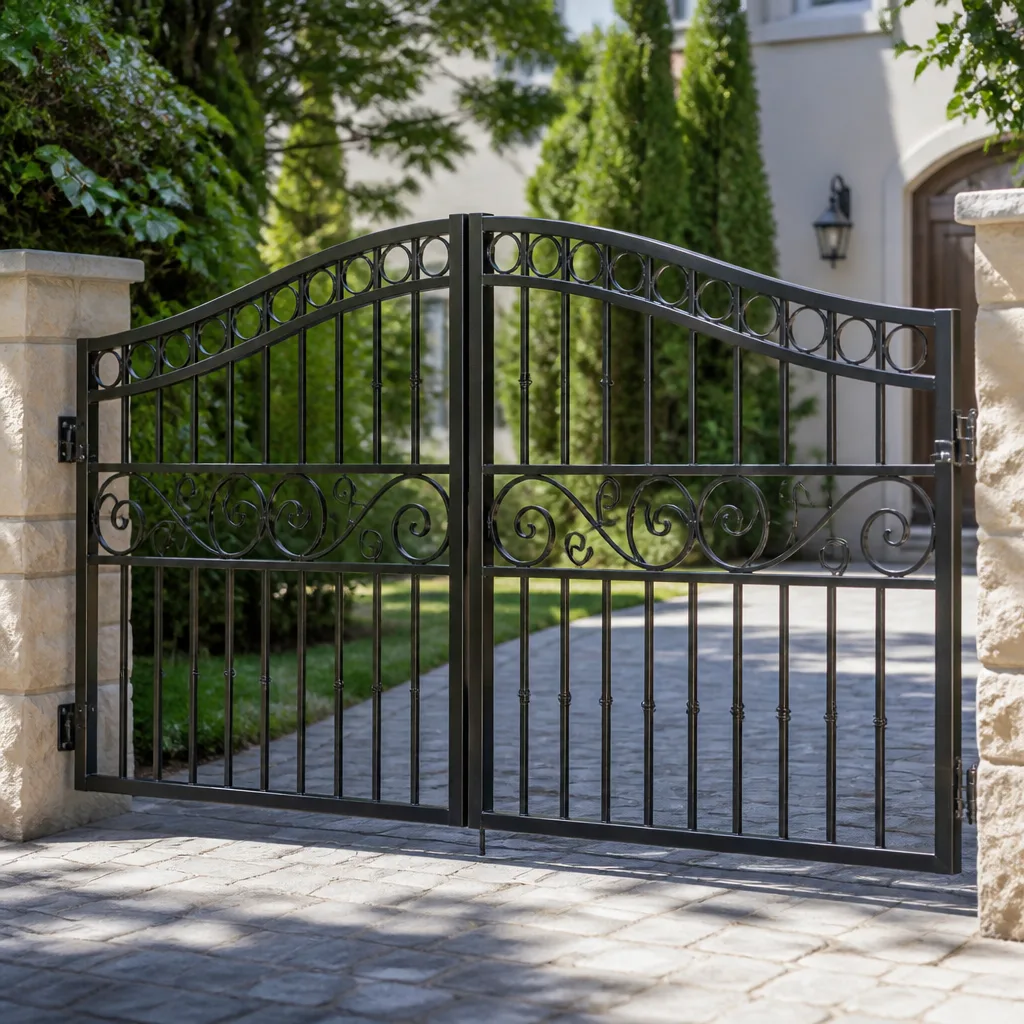 Wrought iron
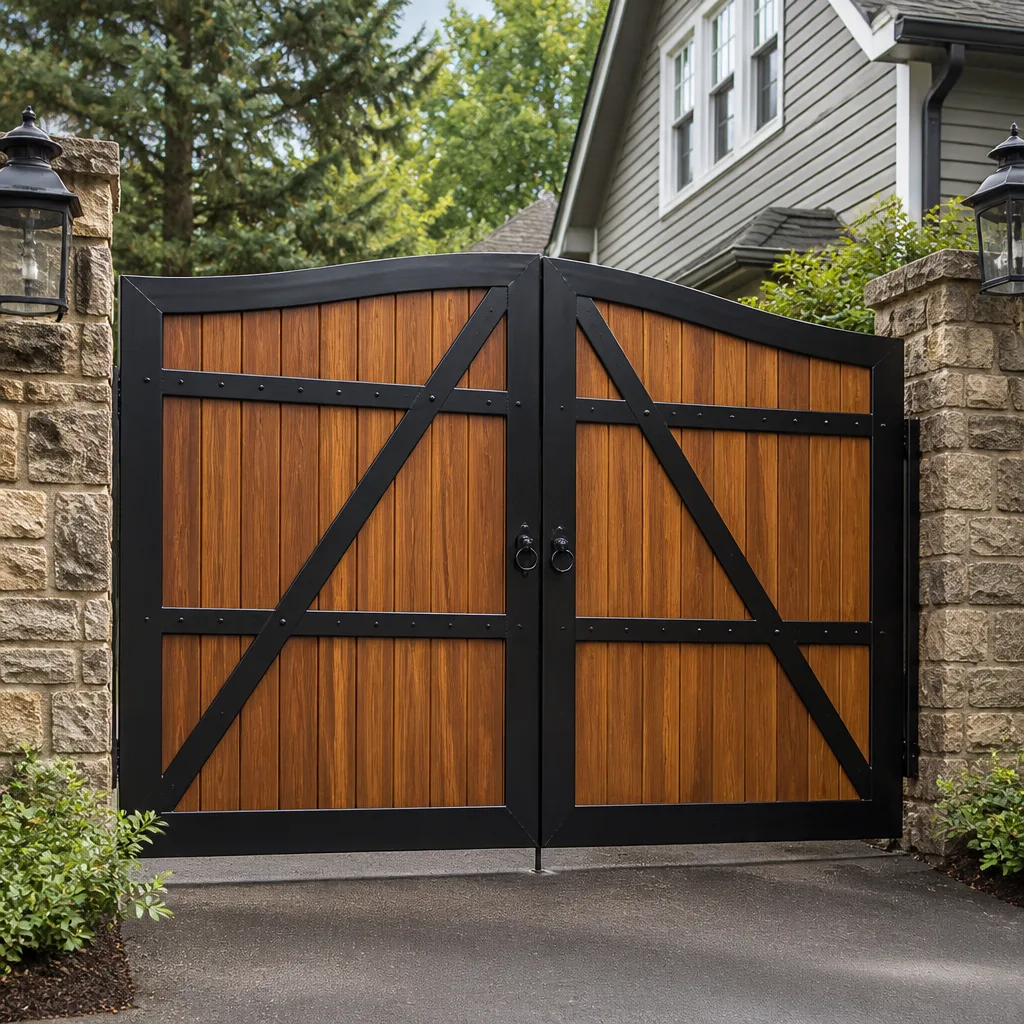 Wood & steel frame
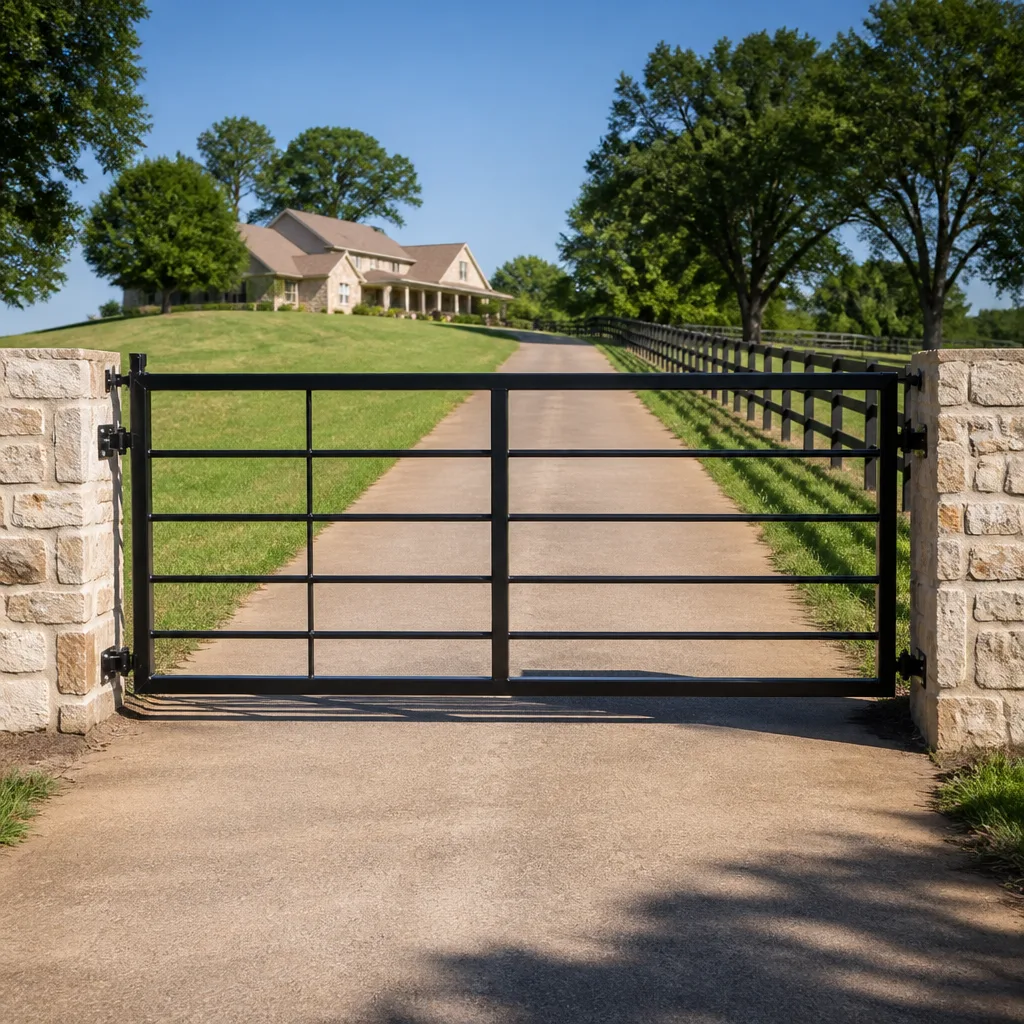 Farm & ranch
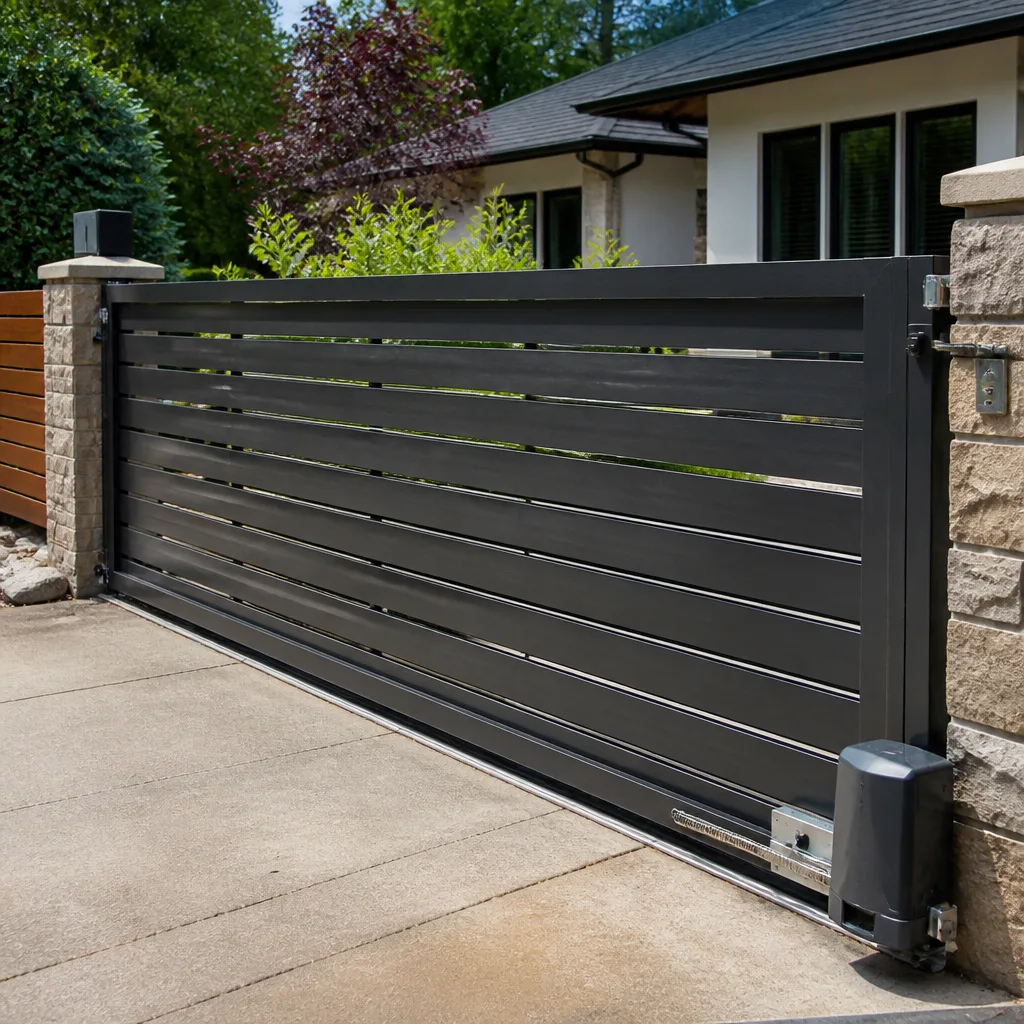 Sliding driveway gates
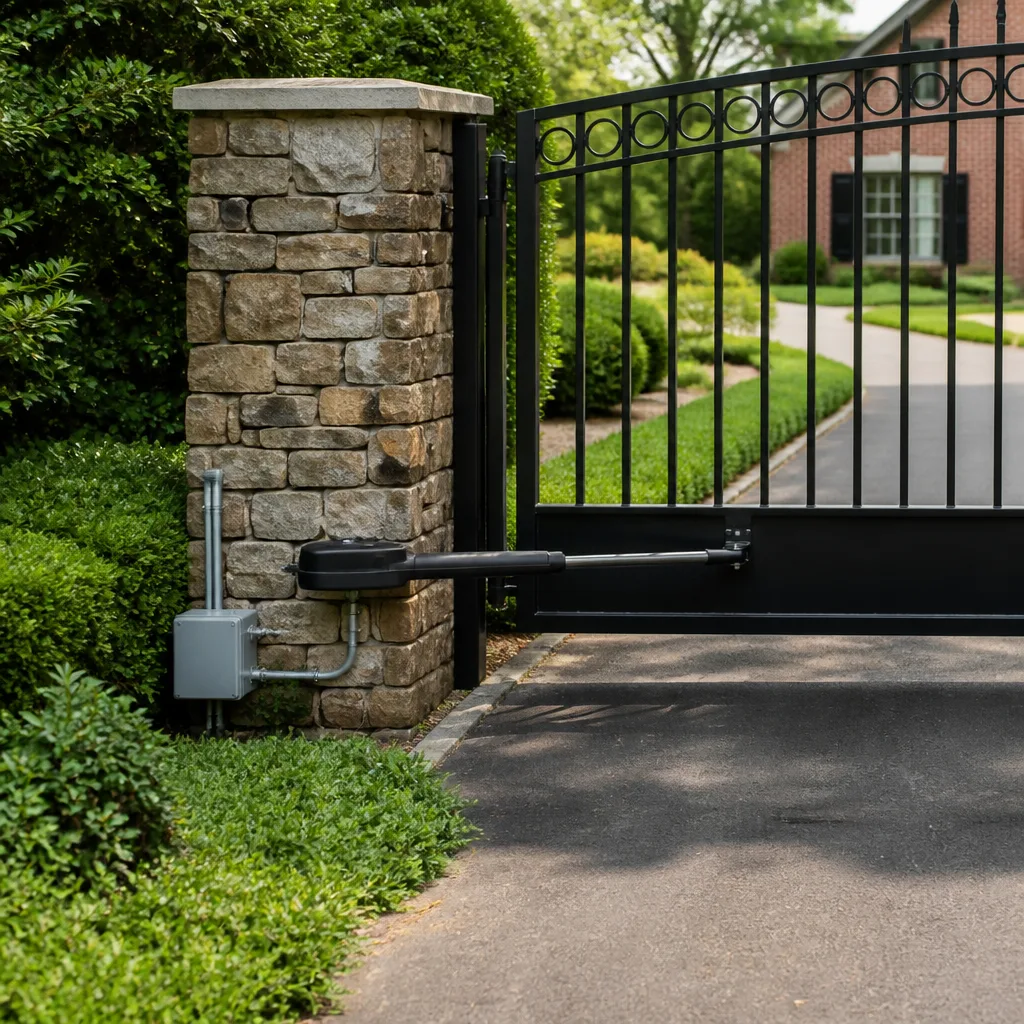 LiftMaster operators
Free on-site gate assessment - hinges, posts, and your LiftMaster or Nice gate operator checked before anything is quoted
The assessment is free and the quote is the invoice.
Get your free estimateThe Complete Guide to Gate Repair in Santa Clarita
The Santa Clarita Valley averages over 280 sunny days a year. That sounds like a selling point, and for backyard barbecues it is. For gate hardware, it’s a slow-motion assault. UV radiation breaks down wire insulation, 100°F-plus heat cycles bake control boards inside metal enclosures, and the caliche soil under most of Valencia and Saugus shifts just enough each dry season to throw posts out of plumb. Add Santa Ana wind gusts and periodic power shutoffs during fire weather, and you get a failure pattern that’s specific to Santa Clarita. This guide maps every common repair need to the local conditions that cause it, so you can spot a real fix from a six-month patch.
Quick Answer
Gate repair in Santa Clarita typically costs between $180 and $650 depending on whether you’re dealing with a mechanical issue like a bent track or a control board failure from a power surge. For a detailed breakdown, see our Gate Repair Cost Breakdown: The Santa Clarita Homeowner’s Reference for 2026. Most residential slide gate and swing gate repairs can be completed in a single visit when the technician arrives with the right parts. The key to keeping costs down is diagnosing the root cause rather than treating the symptom, because Santa Clarita’s heat, soil, and wind conditions create recurring failure modes that generic repairs won’t solve.
Styles & brands we work with
Table of Contents
- Why Santa Clarita Gates Fail Differently
- The Gate Types That Dominate Santa Clarita Repair Calls
- The Three Santa Clarita Failure Sequences
- Gate Motor and Opener Repair: What Actually Breaks
- What Gate Repair Costs in Santa Clarita
- How to Tell a Real Fix From a Patch
- HOA Rules and Permit Considerations for Santa Clarita Gates
- What You Can Safely Check Yourself (and What You Shouldn’t)
Why Santa Clarita Gates Fail Differently
National gate repair guides will tell you gates fail because of worn rollers, dead batteries, and misaligned sensors. That’s true everywhere. What they won’t tell you is that Santa Clarita has a specific failure profile driven by three local conditions that interact with each other.
First, the heat. Summer temperatures in the Santa Clarita Valley routinely push past 100°F, and the metal enclosures that house gate control boards can hit 140°F or higher in direct sun. Capacitors on the board degrade faster at those temperatures. We’ve replaced LiftMaster control boards in Saugus that failed at year six, while identical boards in coastal climates last twice as long. The board didn’t fail because it was defective. It failed because it lived its life in a metal box baking in the sun.
Second, the soil. Much of Santa Clarita sits on caliche, a calcium-carbonate hardpan that expands and contracts with moisture cycles. When the ground dries out each summer, it contracts. When winter rains come, it swells. That slow, seasonal movement works gate posts loose over time. A gate that dragged slightly in August might bind completely by March, and the underlying problem isn’t the hinge or the roller. It’s the post moving in the soil.
Third, the wind. Santa Ana conditions gust through the passes and hit gate panels like sails. A swing gate that’s left open on a windy day catches enough force to bend hinge brackets and warp panel framing. Slide gates fare better, but wind-blown debris jams tracks and strips gear teeth on opener motors. If you live in Stevenson Ranch or anywhere with an open western exposure, wind-load stress is part of your gate’s everyday life.
Combine all three and you get a repair map that looks different from the national average. More control board replacements, more post resetting, and more hinge work. Less of the simple stuff.
The Gate Types That Dominate Santa Clarita Repair Calls
Drive through Valencia, Stevenson Ranch, or the older sections of Saugus and you’ll notice two gate styles everywhere: ornamental iron swing gates and tubular steel slide gates. That’s not an accident. It’s the direct result of HOA architectural standards in this valley.
Most HOA-governed communities in Santa Clarita require gates that match the neighborhood’s aesthetic. Wrought-look ornamental iron with spear-top pickets is the default for single-family homes. Multi-unit communities and homes on busier streets lean toward slide gates, which don’t require swing clearance into the driveway.
Here’s what that means for repair work:
Ornamental Iron Swing Gates
- Weight is the quiet enemy. Those spear-top pickets and decorative scrollwork add significant mass. A 14-foot ornamental iron swing gate can weigh 500 to 800 pounds. Hinges and posts carry that load every day, all year.
- Hinge wear is the most common failure. Heavy gates sag, and a sagging gate drags on the ground or binds against the latch post. The fix is often new heavy-duty hinges or post reinforcement, not just a latch adjustment.
- Wind load hits these hardest. Ornamental iron has large surface area with empty space between pickets. Wind still pushes against the frame and pickets, and every gust transfers force to the hinge side. Over years, that fatigues weld points.
Tubular Steel Slide Gates
- Track alignment is everything. Slide gates run on a track, and if that track shifts even half an inch, the gate grinds, jumps the rail, or stalls the motor. Caliche soil movement is the usual culprit in Santa Clarita.
- Roller replacement is routine. Plastic rollers crack and wear, especially in UV-heavy climates. Metal rollers last longer but transfer more vibration to the frame. The right roller depends on gate weight and track condition.
- Gear rack and motor coupling. The one place slide gates commonly fail is the connection between the motor gear and the rack bolted to the gate. Grinding noises usually point here first.
Both gate types get paired with automatic openers, and that’s covered in depth below. If you’re dealing with an opener issue specifically, our Gate Motor Repair in Santa Clarita page breaks down motor-specific failures in more detail. For the full picture on electric opener systems, see our Electric Gate Repair in Santa Clarita guide.
The Three Santa Clarita Failure Sequences
In our experience, most gate failures in this valley follow one of three scripts. Learning to recognize which script you’re in will save you money, because it tells you whether you need a component swapped or a deeper fix.
Sequence 1: UV-Degraded Wiring Insulation
Start with a gate that works fine for five or six years. Then you notice the opener trips its breaker occasionally. Then the keypad gets flaky. Then the gate opens on its own at 2 a.m. because exposed wire is shorting against the frame.
- Years 1-4: Low-voltage wire insulation begins turning brittle under UV exposure. The outer jacket cracks first, then the inner insulation on individual conductors.
- Years 5-7: Cracks expose copper. Moisture from sprinkler overspray or winter rain gets in. Intermittent shorts begin.
- Years 7-10: The control board sees erratic voltage from shorted sensor and keypad wires. Boards get damaged. The gate behaves unpredictably: phantom activations, failure to close, or complete non-response.
The real fix here is re-running the low-voltage wiring with UV-rated cable inside conduit, not just replacing the control board. If you only replace the board, the same short will destroy the new one within a year.
Sequence 2: Caliche Soil Heave on Gate Posts
This one is slower and easier to miss until it’s obvious.
- Dry season: Caliche soil contracts as it dries. Gate posts settle slightly, or the surrounding concrete pad shifts. The gate drifts out of alignment by a quarter-inch. You might not notice.
- Rainy season: Soil expands. Posts that shifted outward now get pushed back, but never exactly to their original position. The gate binds against the latch or scrapes the ground at one corner.
- Repeat for 3-5 years: Each cycle magnifies the misalignment. Eventually hinges bend, the opener motor overheats fighting the resistance, and the gate fails.
The fix is resetting the post in a deeper footing that reaches below the active soil layer, typically 36 to 48 inches in parts of Santa Clarita. A post that’s simply re-straightened without a new footing will heave again within a season or two.
Sequence 3: Santa Ana Wind-Load Stress
Wind is not a constant force. It gusts, and each gust is a load cycle. Metal fatigues through cycle accumulation, the same way a paperclip breaks after bending it back and forth enough times.
- Early warning signs: Gate sways slightly in strong wind. Hinge bolts loosen and need re-tightening more than once a year.
- Progression: Weld points at the hinge side develop hairline cracks. Panel framing begins to twist. The gate doesn’t sit flat in the closed position.
- Failure: A hinge bracket snaps or a weld fails completely. The gate drops on one side or swings free.
On gates with an automatic opener, wind stress also affects the opener arm or the rack-and-pinion connection. That’s often the failure point before the gate itself lets go, because the opener components are typically the lightest metal in the system.
Gate Motor and Opener Repair: What Actually Breaks
The gate motor, called a gate opener or “the box that slides or swings your gate automatically,” is the most complex single component in your gate system. When it fails, it’s almost never the motor itself. Here’s what we see in Santa Clarita, by frequency.
1. Control Board Failure
The control board is the circuit board that interprets signals from your remote, keypad, loop detector, and safety sensors. It’s the most heat-sensitive part of the opener. In Santa Clarita summers, control boards inside metal enclosures face sustained temperatures that accelerate capacitor aging. The result: the board works fine for years, then develops erratic behavior, then quits.
A power surge during a Public Safety Power Shutoff (PSPS) event or the restoration afterward can finish off a board that was already heat-stressed. We saw a measurable increase in control board replacements after both the 2020 and 2024 fire-weather shutoff periods. The board takes the hit so the motor doesn’t have to.
2. Limit Switch Drift
Limit switches tell the opener where “open” and “closed” are. Heat expansion moves the physical switch arms a fraction at a time, so a gate that closed perfectly in June might stop an inch short in September. The symptom is usually a gate that reverses immediately after closing, or an opener that won’t shut the gate all the way. On LiftMaster and FAAC units in this valley, limit switch adjustment is one of the most common service calls we perform.
3. Battery Failure (Backup Systems Only)
If your gate has a battery backup for fire-weather power shutoffs, that battery has a service life of roughly 3 to 5 years. A failed backup battery won’t stop the gate from working on normal power, but it means the gate won’t open during a PSPS event. If you live in a wildfire-risk zone in Santa Clarita, a dead backup battery is a safety issue, not just a convenience issue. It needs testing before fire season, not after it starts.
4. Gearbox and Drive Train Wear
BFT, Mighty Mule, and Linear openers all have plastic gears in the drive train as a designed failure point. The gear strips before the motor burns out, which is a $250 to $400 repair instead of an $800 opener replacement. When you hear grinding from the opener but the gate still moves, that’s usually the plastic gear turning to dust.
What Gate Repair Costs in Santa Clarita
Transparent pricing matters, and the written price is always given before any work starts. Here’s a realistic breakdown of what gate repairs cost in the Santa Clarita market, based on the failures most common here. These are ranges, not quotes, because every gate is different.
- Hinge replacement (single gate): $180 to $350. Includes heavy-duty hinge hardware and labor. Ornamental iron gates on the heavier end cost more.
- Post reset and re-footing: $400 to $900. The spread reflects soil conditions and post size. Caliche digging is slow work.
- Track realignment (slide gate): $150 to $300. Includes re-leveling the track and checking roller condition.
- Roller replacement (set): $120 to $280. Depends on gate weight and roller type.
- Control board replacement: $300 to $550 including the part. Board cost varies by brand; FAAC and BFT boards run slightly higher than Mighty Mule or Linear.
- Low-voltage wiring re-run: $200 to $450. UV-rated wire in conduit, typically 50 to 100 feet of run.
- Limit switch adjustment or replacement: $90 to $180. Adjustment alone is on the lower end.
- Gear replacement (opener drive train): $250 to $400. Most common on Mighty Mule and Linear units.
- Full opener replacement: $800 to $1,800 installed. Includes the opener, remote programming, and safety sensor check.
These are the prices you should expect from a licensed, insured gate repair company in Santa Clarita. If a quote comes in far below these ranges, ask what’s excluded. A $79 service call that turns into a $700 “discovery” after the tech arrives isn’t a bargain. Every Warden Gate Repair job includes a written price before any work starts, so there’s no discovery phase and no surprise line item at the end.
How to Tell a Real Fix From a Patch
This is the most important skill this guide can teach you. A patch buys time. A fix addresses the root cause. Both can cost the same on invoice day, but the long-term math is very different. See our DIY vs Professional Gate Repair: The Santa Clarita Homeowner’s Decision Guide to understand when to call a pro.
Here are the tells:
- The hinge shim is a patch. If a sagging gate gets a washer or shim behind one hinge to level it, the weight problem hasn’t changed. The gate will sag again, worse, because the shim concentrates force on a smaller area. A real fix is replacing worn hinges and checking the post for movement.
- The board swap without wiring check is a patch. If a control board fails and the tech replaces it without inspecting the low-voltage wiring, you’re likely to lose the new board to the same short that killed the first one. In Santa Clarita’s UV environment, wiring inspection is step one, not step five.
- The track shim is a patch. When a slide gate grinds, the quick fix is shimming the track where the gate sticks. If the track moved because the soil under it shifted, the shim just moves the problem six months down the line. A real fix addresses the base under the track.
- The gear replacement without checking why the gear stripped is a patch. Gears strip when the gate is binding. Replace the gear and ignore the binding, and the new gear fails too. The binding is the repair. The gear is just the symptom.
Every Warden Gate Repair job in Santa Clarita comes with the 365-Day Done Right Promise: if the repair isn’t right, we make it right with a free return visit. That guarantee only works because we fix the root cause the first time. A company that patches can’t afford to guarantee its work for a year.
HOA Rules and Permit Considerations for Santa Clarita Gates
If you live in a HOA-governed community in Valencia, Stevenson Ranch, Saugus, or Castaic, your gate is subject to architectural rules. This affects repair work in practical ways.
First, many HOAs require that replacement gates or major visible hardware match the original design. If your ornamental iron gate needs new hinges, the HOA probably won’t care. If you’re replacing the gate entirely, they might. Check your CCRs before ordering a new gate, not after it’s installed.
Second, slide gates and swing gates that open outward toward a street or sidewalk may need city permitting for major structural work. A repair that keeps the existing gate in place rarely triggers permit requirements, but resetting posts or pouring new footings can. That’s a structural change, not a repair.
Third, automatic gate safety requirements are state law. Photoelectric sensors and contact edges that reverse the gate when something is in the path are mandatory on new installations. If your gate predates these requirements and the safety system is damaged or missing, a repair should include bringing the safety system up to code. This isn’t optional, and it’s not something to skip to save money.
If you’re not sure where your gate stands, a good first step is to ask the repair company whether they handle HOA coordination. Not all do. At Warden Gate Repair, we’ve worked with HOA-managed communities throughout the Santa Clarita Valley and can guide you through what your specific community requires.
What You Can Safely Check Yourself (and What You Shouldn’t)
Before you call anyone, there are a few things you can check in about ten minutes. None of these involve opening the opener enclosure or touching loaded hinges. Those are the two places where serious injury can happen.
Safe to Check
- Visual track inspection (slide gates): Look for debris, rocks, or compacted soil in the track channel. Clear anything obvious. Don’t stick your fingers under the gate while it’s powered.
- Photo eye alignment: Safety sensors have small indicator lights. If one is blinking or dark, the beam may be misaligned or the lens dirty. Wipe the lens gently. If the gate still won’t close, leave it and call a pro.
- Remote battery: If the gate opens from the keypad but not the remote, the remote battery is the first thing to try. A $3 fix solves a surprising number of “opener” problems.
- Post visual check: Look for visible cracks in concrete around gate posts or a gap opening between the post and the surrounding concrete. You’re looking, not touching.
Do Not Attempt
Gate springs, whether torsion springs on a swing gate or tension springs on a slide gate, are under enough load to cause serious injury if they let go. Hinge bolts on a heavy ornamental iron gate carry hundreds of pounds. Control boards handle line voltage. These are jobs for a trained professional with the right tools and experience. A real gate expert will always flag the danger and recommend professional service rather than encouraging a homeowner to take risks.
Common Mistakes to Avoid
- Ignoring a slow gate because it still works. A gate that takes 20% longer to open is telling you the motor is fighting resistance. That resistance is destroying the gearbox. The sooner you address it, the cheaper the fix.
- Replacing the opener without addressing the gate. If the gate binds and you put a fresh opener on it, the new opener inherits the same load problem. Fix the gate, then the opener.
- Using indoor-rated wire for outdoor gate runs. Standard Romex or indoor low-voltage wire will fail within a few Santa Clarita summers. UV-rated wire inside conduit is the only correct choice.
- Waiting until fire season to test the battery backup. Backup batteries die quietly. When a PSPS event hits and you need the gate open, that’s the wrong time to discover the battery is dead.
- Choosing a gate style based on looks alone. Solid wood gates look warm, but they’re heavy and catch wind like a sail. In Santa Clarita’s wind conditions, a lighter ornamental design will outlast a heavy solid panel.
- Accepting a verbal quote with no written price. Written price before work starts is the standard any reputable gate repair company in Santa Clarita will meet. If a company won’t write it down, ask why not.
- Skipping safety sensor repair to save money. Safety sensors are mandatory for a reason. A gate that can crush a child or pet is a liability, full stop. Get it fixed.
See the difference
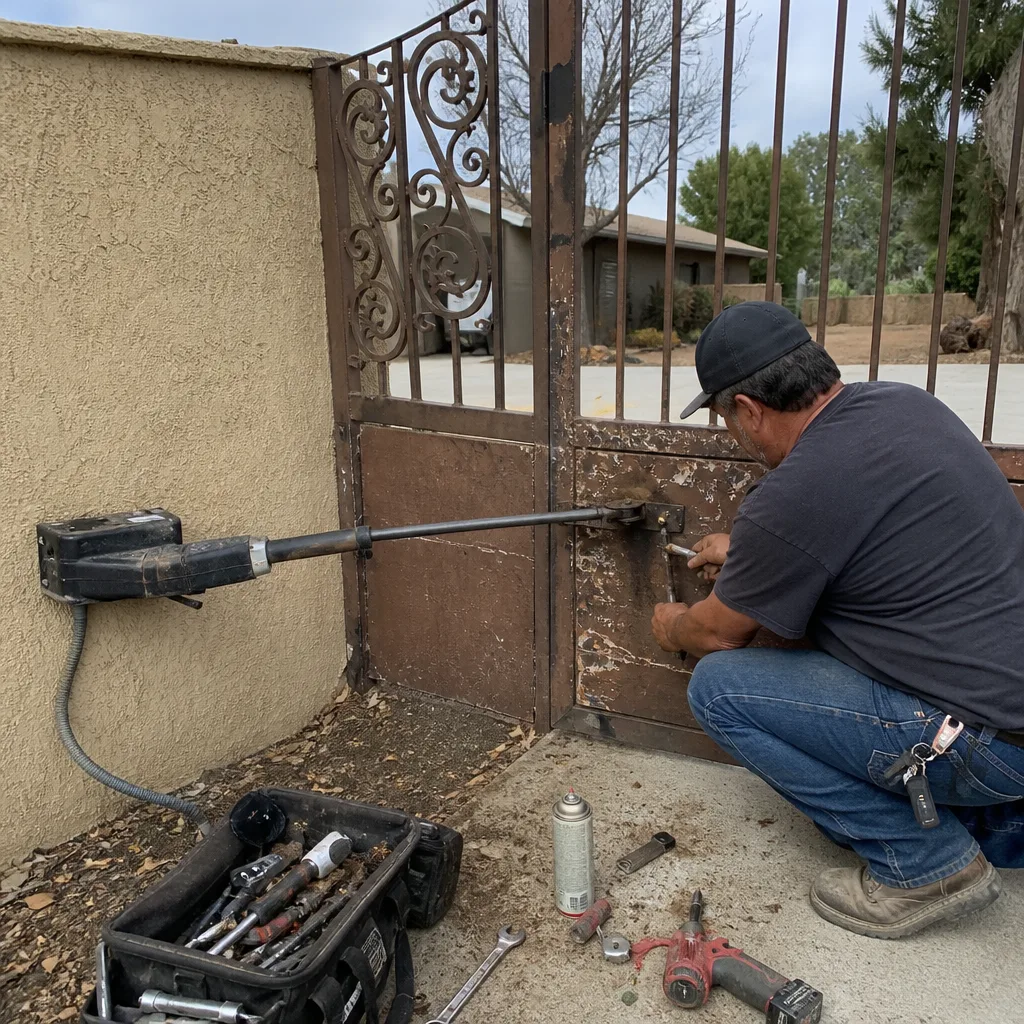 Before
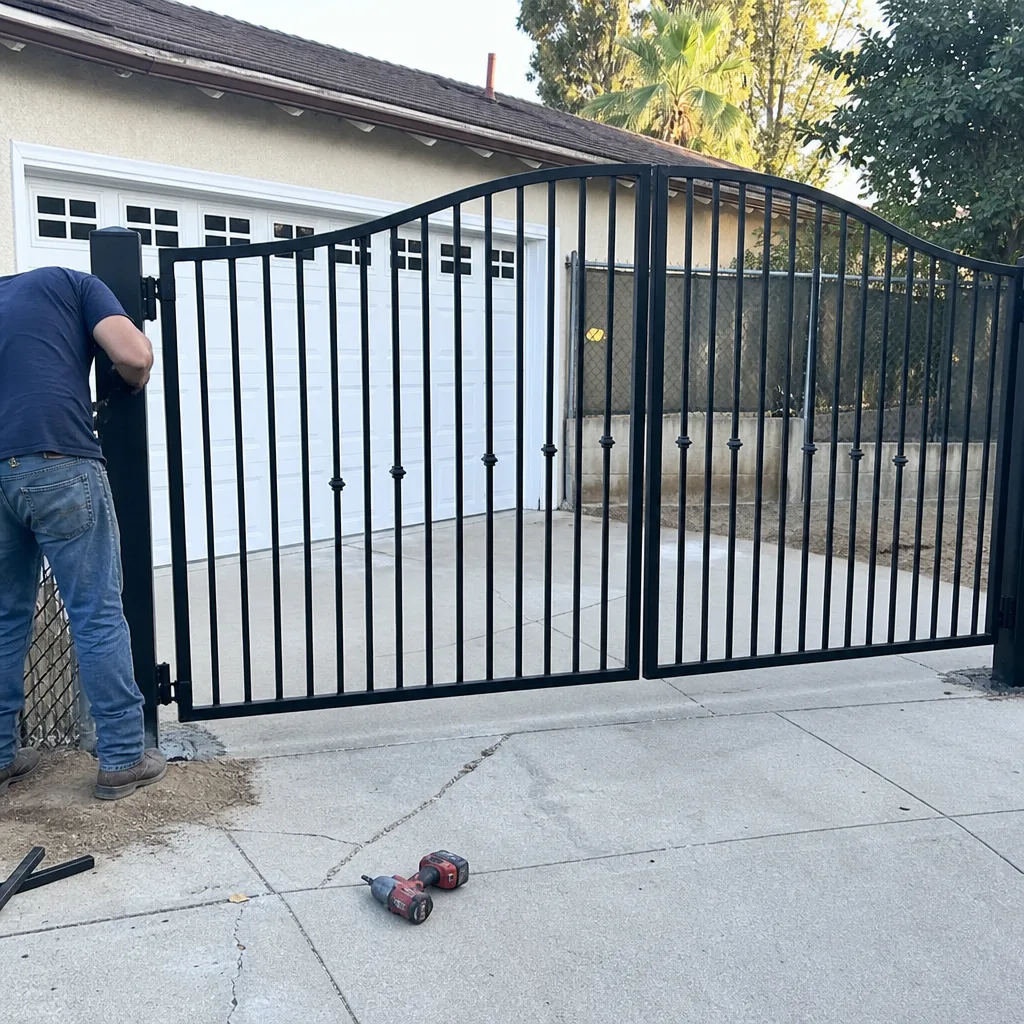 After
After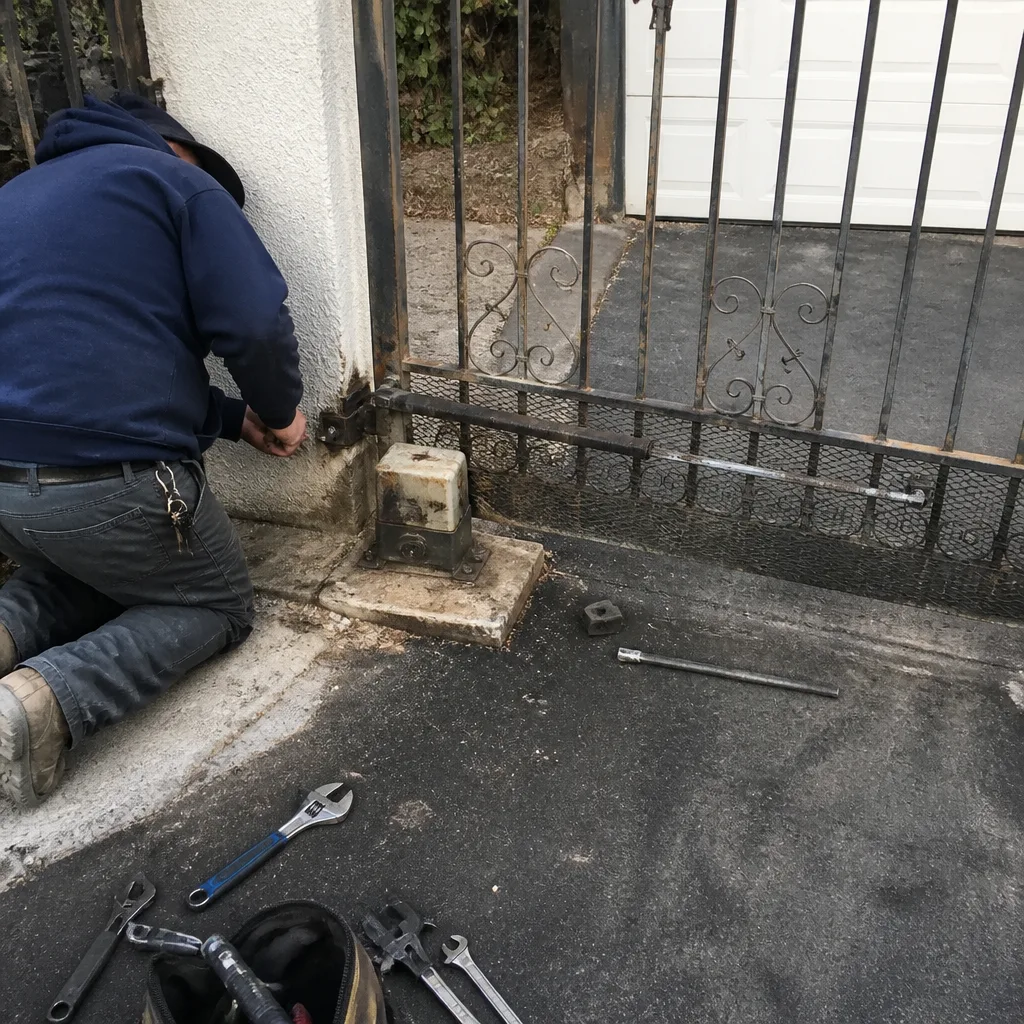 Before
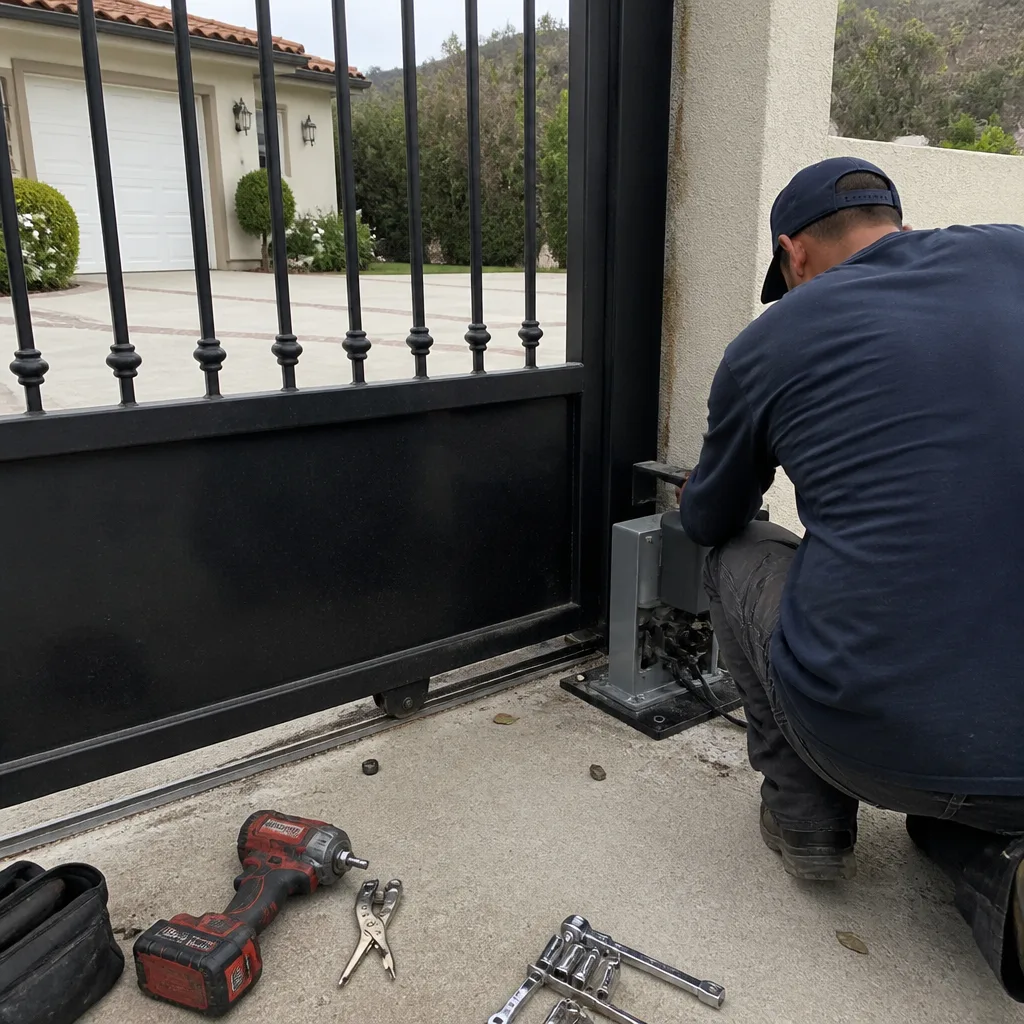 After
After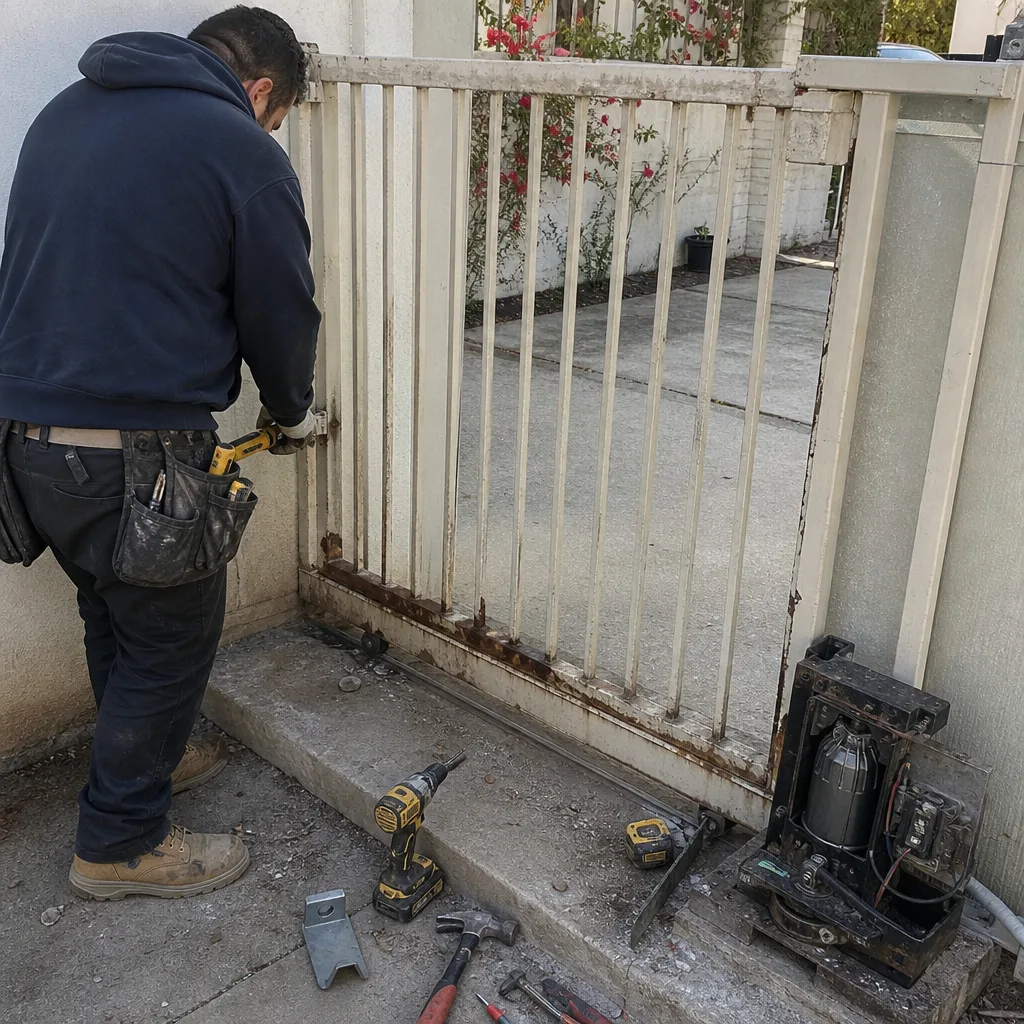 Before
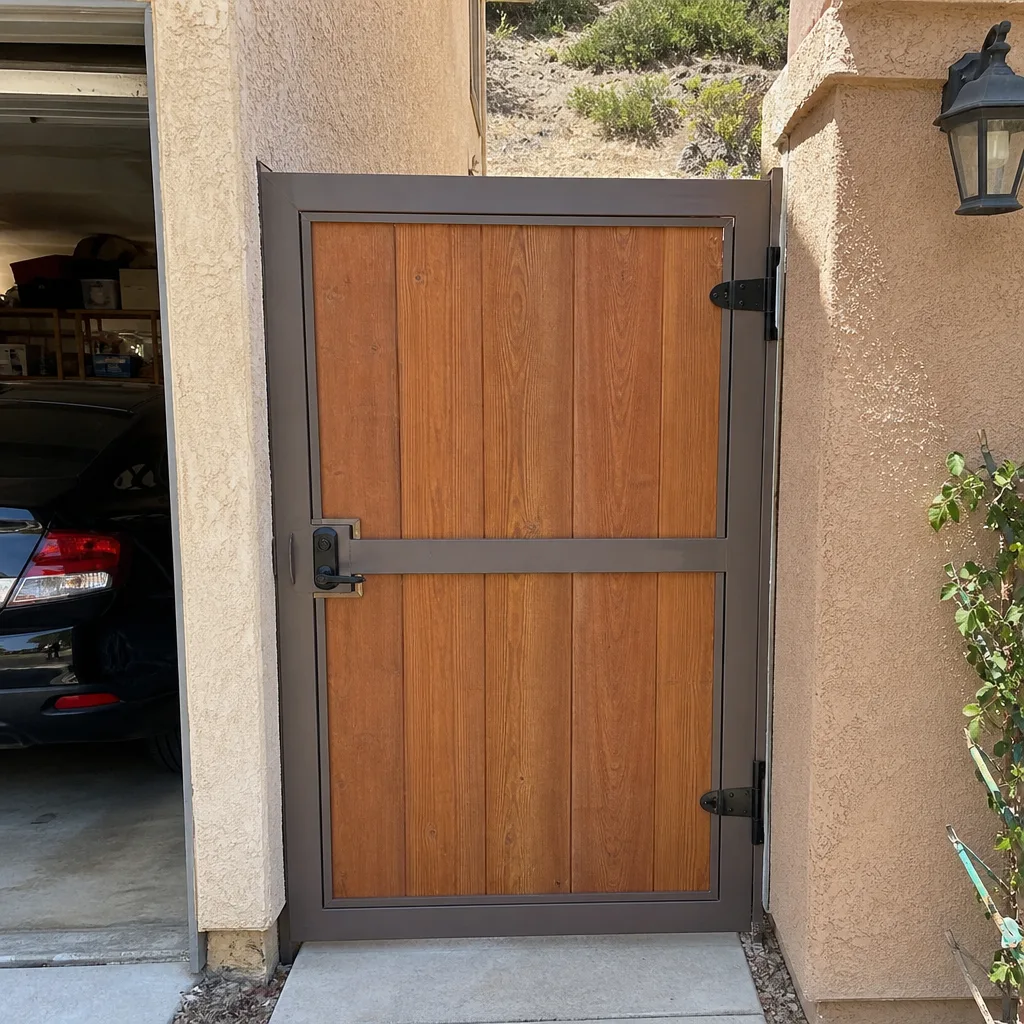 After
AfterWhen to Call a Professional
Call a Gate Repair professional when the gate binds, grinds, reverses unexpectedly, stops mid-travel, or won’t respond to any input. Call when you see visible post movement or concrete cracks around posts. Call when the opener hums but doesn’t move, which usually means a failed capacitor, jammed gear, or overload. Call when you’re in a fire-weather area and your battery backup hasn’t been tested in over two years. Any of those signals means a repair is needed soon, not eventually. Warden Gate Repair Santa Clarita offers free estimates in Santa Clarita. Call (661) 425-9011 and you’ll talk to a live person, get a written price, and know exactly who’s coming to your door before they arrive.
Frequently Asked Questions
Gate repair in Santa Clarita typically costs between $180 and $650, with simple fixes like limit switch adjustments at the low end and control board replacements at the high end. Full opener replacements run $800 to $1,800 installed. The price is quoted and agreed before any work starts. Call (661) 425-9011 for an exact quote, estimates are free.
Most mechanical repairs like hinge replacement, roller swaps, and limit switch adjustments can be completed in a single visit. Control board replacements may require a brief wait for the specific part if it’s not a brand we stock that day. Repair work is handled on a priority basis, and we’ll tell you on the phone whether same-day service is possible for your specific issue.
LiftMaster, FAAC, and BFT are the brands we see most often in Santa Clarita’s newer tract communities, while Mighty Mule and Linear are common on older properties and rural lots. Each has specific failure points. The key is choosing a repair company with factory training on your specific brand, because the diagnostic process differs between them.
Power restoration after a PSPS shutoff or rolling blackout often sends a voltage spike through the control board, and boards that were already heat-stressed from Santa Clarita summers are vulnerable. The first step is testing the breaker and the opener’s internal fuse. If those are fine, the control board likely needs replacement.
Yes. Warden Gate Repair serves the entire Santa Clarita Valley including Valencia, Stevenson Ranch, Saugus, Canyon Country, Newhall, and Castaic. We know the HOA requirements across these communities and the soil conditions that affect gate posts in each area.
Yes. Electric gate repair is a core service at Warden Gate Repair, and we handle the full system including the control board, low-voltage wiring, safety sensors, keypads, and the power connection from your main panel. Every job comes with a written price and the 365-Day Done Right Promise. Call (661) 425-9011 to schedule a free estimate.
The Bottom Line
Gate repair in Santa Clarita is shaped by the valley’s heat, soil, and wind more than anything else. UV-radiation degrades wiring. Caliche soil shifts gate posts. Santa Ana gusts fatigue hinges and opener mounts. The fix that lasts is the one that accounts for these conditions, not just the symptom you noticed. Whether you need a hinge replaced, a track realigned, or a full opener swap, demand a written price before work starts and a real guarantee on the back end. That’s the standard every gate repair should meet in Santa Clarita. For more guides & resources, visit our blog. For help with your gate, call Warden Gate Repair at (661) 425-9011. We’ll answer the phone, give you a written price, and send a technician whose name and photo you’ll know before they ring your doorbell.
Written by Cole Rafferty, Owner at Warden Gate Repair Santa Clarita, serving Santa Clarita since 2008.