
Last updated October 16, 2026
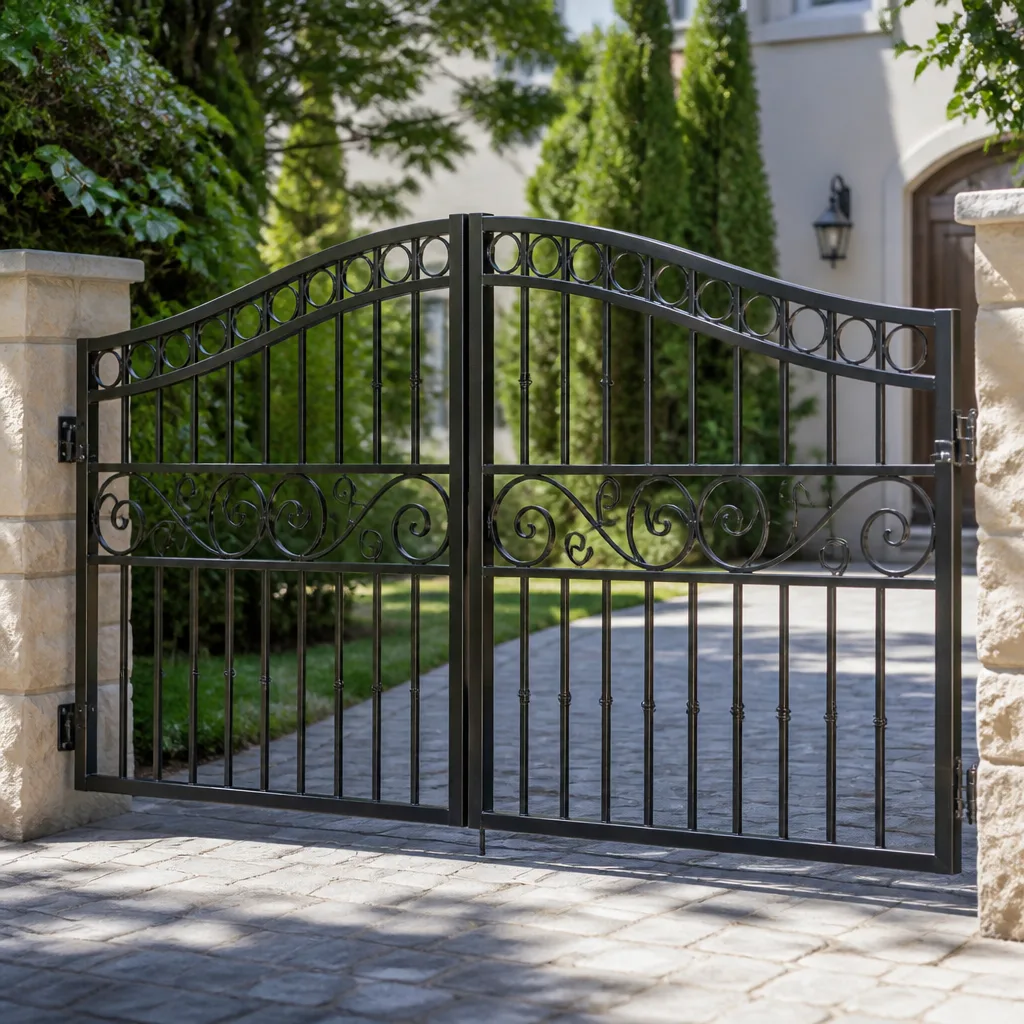 Wrought iron
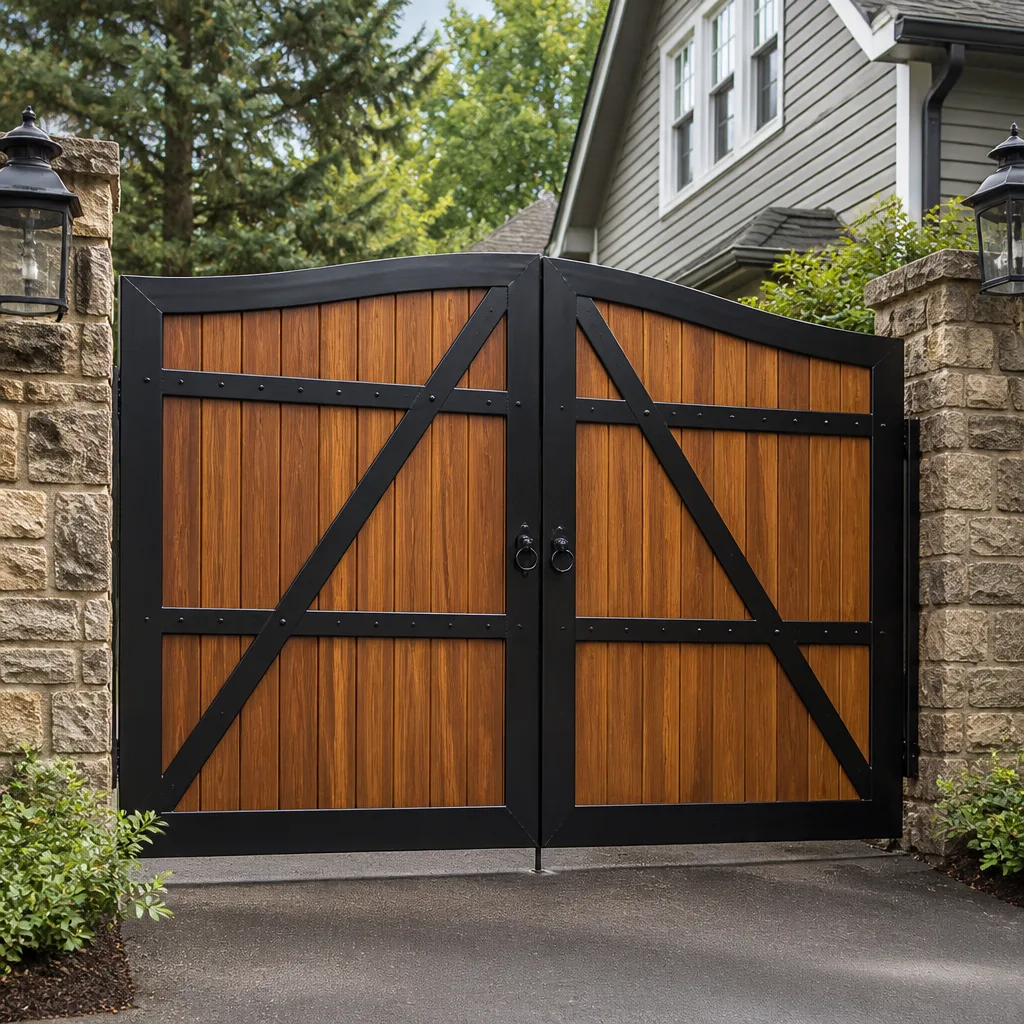 Wood & steel frame
 Farm & ranch
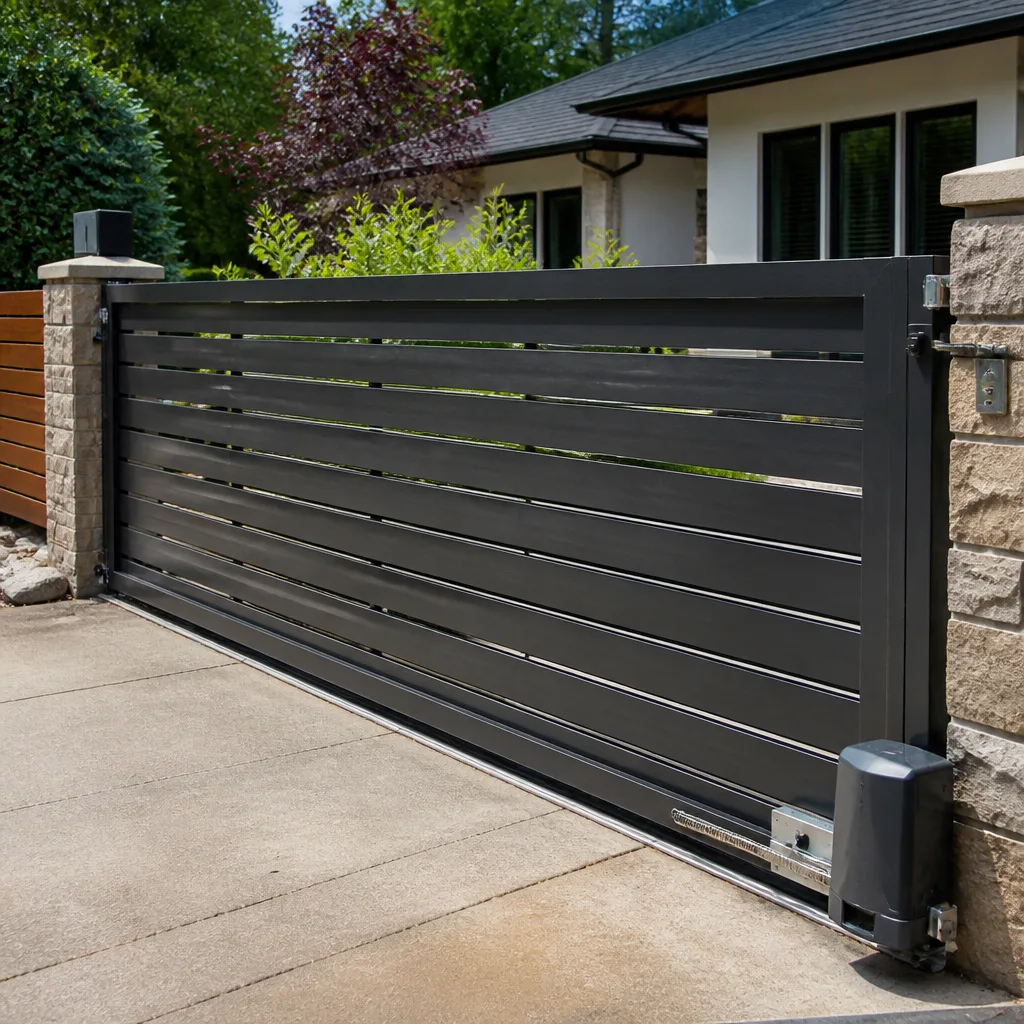 Sliding driveway gates
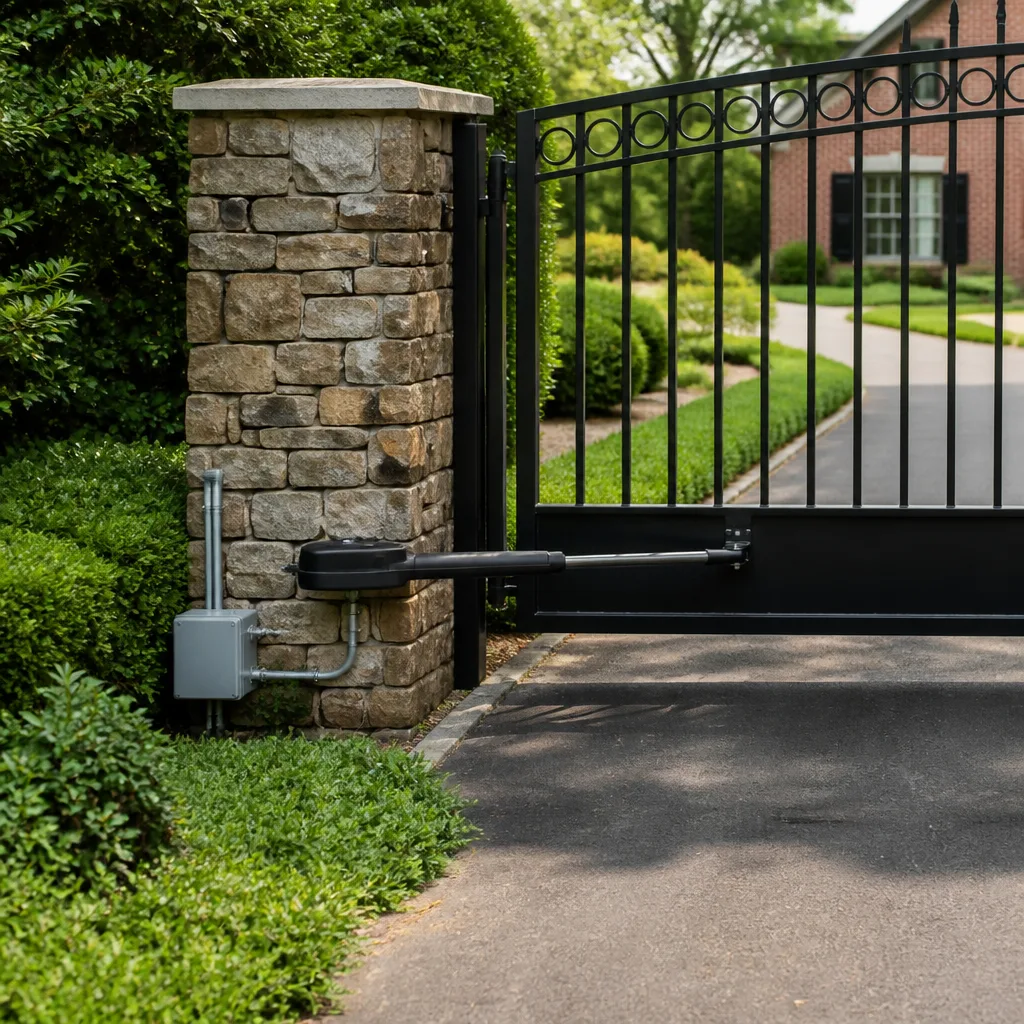 LiftMaster operators
Free on-site gate assessment - hinges, posts, and your LiftMaster or Nice gate operator checked before anything is quoted
The assessment is free and the quote is the invoice.
Get your free estimateGate Repair Warning Signs: A Santa Clarita Homeowner’s Reference Guide
Most gate warning sign guides read like a vague list of bad omens: “strange noises,” “slow movement,” “doesn’t open.” That’s not helpful. A gate that reverses mid-cycle could mean a dirty photo-eye you can clean in five minutes, or a failing motor capacitor that will strand your car in the driveway within two weeks. The difference matters, and it’s rarely explained. This guide ranks every common gate symptom in Santa Clarita by real urgency, maps specific sounds to specific failing parts, and tells you exactly how to describe what you’re seeing to a Gate Repair services tech so you get an accurate phone quote instead of “we’ll need to come look at it first.”
Quick Answer
The gate repair warning signs that demand immediate attention in Santa Clarita are: a gate that reverses direction mid-cycle for no visible reason, grinding or clicking sounds coming from the motor housing, visible cracking at weld points on ornamental iron, and any sagging that causes the gate to drag or catch. These indicate failing motors, control boards, or structural fatigue that can escalate from inconvenient to dangerous within days. For guidance on finding qualified help, see our How to Hire a Gate Repair Contractor in Santa Clarita: A Step-by-Step Guide. Signs you can safely watch for 30 days include slow-but-steady operation, light surface rust, and occasional remote range issues.
Styles & brands we work with
Table of Contents
- The Three-Tier Urgency System Every Santa Clarita Homeowner Needs
- What That Sound Actually Means: Grinding, Clicking, Humming, and Stuttering
- Why “Works Fine Most of the Time” Is the Most Dangerous Failure Pattern
- Visual Warning Signs on Santa Clarita Gate Materials: Rust Bleed, Weld Cracks, and Powder-Coat Bubbling
- Five Safe Checks You Can Do Without Touching Dangerous Components
- How to Describe Your Gate Problem to Get an Accurate Phone Quote
- Santa Clarita-Specific Factors That Accelerate Gate Wear
- Common Mistakes to Avoid
The Three-Tier Urgency System Every Santa Clarita Homeowner Needs
We’ve repaired gates across Valencia, Saugus, Canyon Country, and Newhall for years, and the pattern is always the same: homeowners either panic-call for a squeaky hinge that needed grease, or they ignore a failing capacitor until the gate stops dead on a Friday evening. So we use a simple three-tier system. It tells you what needs action today, what can wait two weeks, and what you should just log in a notebook.
Tier 1: Stop Using It Now
These signs mean a component is actively failing and continued use will make the repair more expensive, sometimes by a factor of three or four. Stop using the gate in automatic mode. Disengage the motor (most operators have a manual release lever) and operate the gate by hand until a technician arrives.
- Gate reverses direction mid-cycle with no obstruction. This is usually the control board sending bad commands or a failing limit switch. It’s also a safety hazard: a reversing gate can strike a car, a child, or a pet. This is the number one sign we tell Santa Clarita homeowners never to ignore.
- Grinding noise from the motor housing that gets worse each cycle. Metal-on-metal grinding inside the operator means a gear or bearing is disintegrating. Every additional cycle shaves metal fragments into the motor. What could be a $200 gear replacement becomes an $800 motor replacement if you keep running it.
- Visible crack at a weld point or hinge mount. On ornamental iron gates, a crack at a weld is structural. Santa Clarita’s wind gusts through the canyons put lateral force on gates that cracked welds cannot survive. A gate that falls off its hinges is a thousand pounds of steel. We’ve seen it happen.
- Gate sags enough to drag on the ground or catch on the track. Sagging means the hinge posts or the gate frame itself is losing structural integrity. Continued motorized operation bends the frame further and damages the motor, which is now fighting extra resistance every cycle.
Tier 2: Schedule Within Two Weeks
These signs indicate wear that will become a Tier 1 problem, but you have a window. Book the repair now, while scheduling is convenient, rather than waiting for the emergency call on a holiday weekend.
- Gate operates but noticeably slower than it did a month ago. This usually means the motor is working harder, often because of a failing capacitor, worn gears, or increasing resistance from misaligned rollers. Slow operation is the canary in the coal mine.
- Humming sound with no movement, then the gate eventually starts. A motor that hums before engaging often has a failing start capacitor. The capacitor gives the motor its initial jolt. When it’s weak, the motor strains. It will eventually fail to start at all. This is a sub-$150 part replacement if caught early.
- Remote works from the driveway but not from the street. Reduced range points to a failing receiver board or antenna. It’s not dangerous, but it’s a clear signal the control electronics are degrading. Better to fix it on your schedule than when the gate refuses to open entirely during a Santa Clarita heat wave.
- Light surface rust appearing in multiple spots. Surface rust on ornamental iron is normal in Santa Clarita’s dry climate, but when it appears in spreading patches, moisture is getting under the powder coat. Treating rust now means sanding and touch-up paint. Treating it in two years means cutting out and replacing sections of the gate.
Tier 3: Watch and Log
These signs are usually false alarms or normal aging. Note them, photograph them, and check again in 30 days. If anything worsens, escalate to Tier 2.
- Squeak or squeal from the hinge area when the gate moves. This is usually dry hinge pins or rollers needing lubrication. Spray a silicone-based lubricant (never WD-40, which attracts dust) and see if the sound resolves. If it persists after lubrication, it becomes a Tier 2 sign: the hinge bushings may be worn.
- Gate stops an inch short of fully closed, then nudges closed. This is often the limit switch needing minor adjustment, not a failing motor. Log how often it happens. If it’s consistent, include it when you next have a technician out for annual maintenance.
- Remote occasionally needs a second press to activate. Before you call anyone, replace the remote battery. Santa Clarita’s summer heat kills remote batteries faster than you’d expect, and a dying battery mimics a failing receiver. If a fresh battery doesn’t fix it, escalate to Tier 2.
- Gate is loud on windy days. Wind pushing against a solid gate panel creates noise that sounds mechanical but isn’t. If the noise only appears during Santa Clarita’s canyon wind events and stops when the wind dies, the gate is fine.
What That Sound Actually Means: Grinding, Clicking, Humming, and Stuttering
Most gate repair calls in Santa Clarita start with the same sentence: “It’s making a weird noise.” But the specific sound is diagnostic. Here’s what each one means, mapped to the component that’s failing. This is the section to bookmark.
Grinding (Metal on Metal)
What it sounds like: A rough, continuous scraping or crunching. It gets louder as the gate moves.
What it means: Inside the gate operator, a drive gear or bearing has worn through its lubrication or broken teeth. The grinding is metal fragments being chewed off. On slide gates, this sound can also come from a wheel bearing on the gate truck that carries the gate along the track. On swing gates, it’s usually the operator’s gear train or a seized hinge.
Urgency: Tier 1. Stop using the gate. Every cycle destroys the component further. A gear replacement on a LiftMaster or Viking operator is a straightforward, relatively inexpensive fix if you catch it before the metal shavings work their way into the motor windings.
Clicking (Rapid on/off)
What it sounds like: A fast repetitive click, like a playing card in bicycle spokes, sometimes accompanied by the gate jolting forward in tiny increments.
What it means: On slide gates, this is the hallmark of a chain that has stretched or a sprocket with stripped teeth. The motor is turning, but the chain is slipping over the broken sprocket. On swing gates, clicking often indicates a failing relay on the control board, clicking open and closed without delivering full power to the motor.
Urgency: Tier 1 for chain or sprocket failure. The chain can snap, which on a slide gate releases the gate and allows it to roll freely if the track has any slope. Tier 2 for a clicking relay, but schedule it; a relay that clicks is a relay that’s about to stop clicking and just stay open.
Humming (No Movement)
What it sounds like: A low, continuous electrical buzz from the operator housing. The gate doesn’t move, or only moves after several seconds of humming.
What it means: The motor is receiving power but cannot start. This is nearly always the start capacitor. The capacitor stores and releases the electrical charge that gives the motor its initial rotation. When it’s weak, the motor hums but can’t turn. If you hold the button down and it eventually starts, that’s a textbook dying capacitor.
Urgency: Tier 2 unless the gate has already stopped moving entirely, in which case Tier 1. A capacitor replacement on Ghost Controls, DoorKing, or Elite openers is a common repair we do every week in Santa Clarita, and it’s one of the least expensive parts on a gate operator.
Intermittent Stuttering (Moves, Stops, Moves)
What it sounds like: The gate moves in jerky bursts, stopping for a second, then lurching forward again. Sometimes it reverses direction briefly.
What it means: This stuttering pattern is different from steady movement with a grind. Stuttering usually points to a failing safety sensor loop, a control board that’s sending erratic commands, or a loose wire connection that breaks contact as the gate vibrates. On slide gates, it can also mean the gate has come slightly out of alignment and is binding against the track, then freeing itself.
Urgency: Tier 2 for control board or sensor issues, but escalate to Tier 1 if the gate ever reverses toward a person or car. A gate that stutters is a gate that’s confused about where it is, and a confused gate is unpredictable.
Why “Works Fine Most of the Time” Is the Most Dangerous Failure Pattern
In our experience across Santa Clarita, the gates that fail catastrophically are almost never the ones that visibly break. They’re the ones that work fine for 28 days, then glitch once. Then work fine for 22 days. Then glitch twice. Homeowners rationalize it: “It was probably just a power flicker” or “The remote was too far away.” Then one morning the gate doesn’t open at all, and it’s the day of a school drop-off, an important appointment, or a medical situation.
What Intermittent Behavior Actually Signals
Intermittent operation is not a fluke. Gates are simple electromechanical systems: a control board sends a signal to a motor, the motor moves the gate, sensors confirm position, the gate stops. When that chain works reliably 99 times and fails on the 100th, a component is degrading. It hasn’t failed yet, but it’s drawing its last reliable breaths.
The most common culprit for intermittent behavior on Santa Clarita gates is the control board. Here’s why the control board matters more than the motor: the board is the brain. It interprets remote signals, monitors safety sensors, manages the open and close cycles, and controls speed. When a board’s relays or transistors start to fail, they don’t fail all at once. They fail under specific conditions: when the board is hot, when the gate has been cycled many times that day, when a component reaches a certain temperature.
Here’s a sequence we’ve seen repeatedly on a Gate Motor Repair call:
- Gate fails to open one morning. Homeowner presses the remote again, and it works.
- Failure repeats a week later, always in the morning, always when the temperature is below 50 degrees.
- Homeowner calls us. The technician opens the control board housing and finds a capacitor on the board with a slightly domed top, a classic early failure sign that’s invisible to the homeowner.
- The board is replaced before it fails completely. The gate works reliably again.
Had steps 1 and 2 been ignored, step 3 would have been a complete board failure on a cold Santa Clarita morning, and step 4 would have been an emergency repair call at 6:30 AM with a gate that won’t open and a car stuck in the driveway.
Intermittent behavior that follows a pattern (morning only, after rain, on hot days, only with one specific remote) is the most valuable diagnostic information you can give a technician. Write it down. The pattern points directly at the failing component.
Visual Warning Signs on Santa Clarita Gate Materials: Rust Bleed, Weld Cracks, and Powder-Coat Bubbling
Santa Clarita’s climate is deceptive for gate materials. We don’t have coastal salt air or heavy rain, so homeowners assume their ornamental iron gate will last forever. But the Santa Clarita Valley gets extreme temperature swings: freezing winter mornings in Canyon Country, 110-degree summer days in Valencia, and high UV exposure year-round. Those swings expand and contract metal, which stresses welds and cracks powder coat. Visual inspection catches these failures before they become structural. Our Seasonal Gate Repair Care for Santa Clarita: Year-Round Homeowner’s Guide covers how to time these checks throughout the year.
Rust Bleed Patterns on Ornamental Iron
Rust on ornamental iron tells a story if you know how to read it. Surface rust, evenly spread, is cosmetic. But rust bleed, which appears as dark streaks running down from a specific point, indicates water is entering a crevice and rusting the metal from the inside. The most common rust bleed points on Santa Clarita gates are:
- Where scrollwork meets the frame. Water collects in the small gap and sits there, rusting the joint from the inside out.
- At the base of vertical pickets. If your gate sits close to the ground and irrigation water or rain splashes up, water wicks into the base of the pickets and rusts them from inside.
- Around hinge mounts and bolt heads. Dissimilar metal contact (steel bolts in iron hinges) creates galvanic corrosion that bleeds rust down the gate face.
Rust bleed means the metal is compromising from the inside. By the time you see the dark streak, the structural section has been weakening for months or years. The fix is removing the rusted section, treating the remaining metal, and re-welding or replacing the affected component. Cosmetic touch-up paint will not stop internal rust.
Weld-Point Cracking
Every ornamental iron gate is an assembly of welded pieces. The welds are the joints, and they’re the first place fatigue shows. On a Santa Clarita gate, weld-point cracking appears most often at:
- The junction where the gate frame meets the hinge side stile. This weld carries the entire weight of the gate every time it swings, plus wind load. It’s the highest-stress point on any swing gate.
- Where decorative scrollwork attaches to the frame. These welds are often smaller and completed faster than structural welds. They crack from wind vibration even on well-built gates.
- At the connection between the gate and the operator arm. The repeated push-pull of the operator concentrates stress at that single point.
A crack at a non-structural weld, like a decorative scroll, is a Tier 3 concern. It’s cosmetic until it isn’t: if the scroll is cracked, water enters the crack and accelerates rust at that joint. A crack at a structural weld is Tier 1. Stop using the gate in automatic mode. The crack is actively propagating, and the gate is living on borrowed time.
Powder-Coat Bubbling as a Corrosion Indicator
Powder coating is the durable finish applied to most modern ornamental iron gates. It looks like paint but is applied electrostatically and baked on, creating a harder, thicker shell. When powder coat bubbles, it means rust is forming underneath and lifting the coating off the metal. The bubble is the canary. The rust underneath is the coal mine.
Powder-coat bubbling on a Santa Clarita gate usually starts at edges and corners, where the coating is thinnest, or around deep scratches from lawn equipment, car doors, or the gate dragging. Once you see bubbling, the fix is not just repainting. The affected area must be stripped back to bare metal, rust removed, primed, and recoated. Left untreated, the rust spreads under the coating, invisible, until a large section of the finish flakes off at once.
The visual signs matter because they’re the one warning you can check yourself without touching anything dangerous. Walk your gate line monthly. Look at the welds. Run your eye down the pickets. Photograph anything that changes, and compare photos month to month. That photo diary is gold when you call a repair company, because it shows the progression instead of a single snapshot.
Five Safe Checks You Can Do Without Touching Dangerous Components
Important safety note before this section: a gate operator contains high-tension springs, a high-torque motor, and in some cases exposed electrical connections. On swing gates, the gate itself can weigh several hundred pounds. If your gate has a tension spring visible along the arm or a torsion assembly, do not attempt to adjust or remove it. The correct action for any spring issue is to call a trained professional. The checks below are observational only. They do not require opening the operator housing or touching the gate mechanism.
1. The Photo-Eye Oblivion Test
Most automatic gates in Santa Clarita use photo-eyes: small paired sensors mounted on either side of the gate opening, one sending an infrared beam and the other receiving it. If the beam is broken while the gate is closing, the gate stops and reverses. This is a safety feature, not an error. If your gate reverses for no visible reason, do this:
- Check if the photo-eye lenses are dirty. Santa Clarita dust is fine and settles on everything. A lens coated in dust scatters the beam and triggers a false obstruction reading.
- Wipe both lenses with a soft dry cloth. Do not use water or cleaner; just dust them.
- Close the gate again. If it completes the cycle, the problem was a dirty lens, not a failing motor.
- If the gate still reverses, the photo-eyes may be misaligned or a sensor is failing. That’s a Tier 2 sign.
2. The Track Obstruction Scan (Slide Gates Only)
Slide gates run on a track along the ground. Santa Clarita’s wind blows leaves, plastic bags, and debris into the track, and the gate’s wheels roll over whatever is there. Walk the full length of the track and remove anything that doesn’t belong. Look for small pebbles wedged in the track groove, accumulated dirt creating a bump, or vegetation growing through the concrete seams. A slide gate that stutters or strains at a specific point in its travel is often rolling over debris in the track, not fighting a motor problem.
3. The Hinge Movement Observation
Stand to the side of the gate (never in the path of the gate) and watch the hinge area while the gate operates through one full cycle. A hinge that flexes, shifts, or shows visible movement at the mounting bolts is failing. Hinges should be perfectly rigid; all movement should happen at the hinge pin. If the hinge plate itself moves against the post, the mounting bolts are loosening or the metal around them is fatiguing. That’s a Tier 2 sign, and if movement is visible enough that the gate jerks, it’s Tier 1.
4. The Voltage Sag Observation
Watch how the gate moves at different times of day. If the gate operates normally in the morning but runs slow in the late afternoon during a Santa Clarita heat wave, the motor may be drawing more power than it should when hot. This points to motor winding degradation or a failing capacitor. Write down the times and temperatures when the gate runs slow. Specific temperature-dependent behavior is a major diagnostic clue for a technician.
5. The Sound Log
Record the sound of your gate with your phone, once per week, from the same distance and position. Play back the recordings. A gate that’s slowly failing will show changes in sound long before it shows changes in movement. A recording from 60 days ago compared to now might reveal a subtle grinding or clicking that your ear has learned to tune out. When you call a repair company, mention that you have recordings and can describe the progression. It saves diagnostic time.
How to Describe Your Gate Problem to Get an Accurate Phone Quote
The most frustrating phrase in gate repair is “we’ll need to come look at it first.” Sometimes that’s genuinely necessary. Often it’s a dodge. You can improve your odds of getting a real phone quote by describing the problem in the language a technician uses. For more guides & resources, explore our blog. Here’s the 5-step description format we teach Santa Clarita homeowners:
Step 1: State the Gate Type
“I have a swing gate” or “I have a slide gate.” If you don’t know, describe the movement: “It swings open like a door” or “It slides sideways along the fence line.” Swing gates use one set of components; slide gates use another. The repair approach and parts are entirely different.
Step 2: State the Operator Brand
Look at the operator: the box that moves the gate. It has a manufacturer name on it. LiftMaster, FAAC, BFT, Linear, Viking, Ghost Controls, DoorKing, Elite, and Mighty Mule are the most common brands we service in Santa Clarita. If you can’t find the brand, look inside the control board cover, where the model number is usually printed on a label. Knowing the brand means the technician brings the right parts on the first trip.
Step 3: Describe the Exact Symptom in One Sentence
Not “it’s broken.” Not “it’s acting weird.” Be specific: “The gate opens fully but reverses halfway through closing, every time, with no obstruction.” Or “The gate makes a grinding noise for the first few seconds of opening, then moves normally.” Or “The remote only works within ten feet of the gate, and only in the morning.” One sentence, one symptom.
Step 4: State When It Started and Whether It’s Getting Worse
“It started making this sound about three weeks ago. It’s been getting louder every week.” Or “The remote range dropped suddenly last month and hasn’t changed since.” The timeline tells the technician whether the failure is progressive or sudden, which points to different components.
Step 5: Mention What You’ve Already Checked
“I replaced the remote battery. I cleaned the photo-eye lenses. I cleared the track. The problem is still there.” This does two things. It tells the technician you’re not calling before doing basic troubleshooting, which earns respect. And it saves them from charging you to do the same checks. More importantly, it moves the conversation toward a real quote because the easy fixes are already eliminated.
If you give these five pieces of information, a competent gate repair company should be able to quote a repair range over the phone. The written price should always be confirmed before any work starts. At Warden Gate Repair Santa Clarita, that’s non-negotiable policy: the price you’re quoted is the price you pay, put in writing before a single tool comes out of the truck. We tell our technicians that surprise invoices are the fastest way to lose a customer’s trust, and trust is the whole business. Which is also why we send the technician’s name and photo before they arrive, so you know exactly who’s coming to your door.
Santa Clarita-Specific Factors That Accelerate Gate Wear
A gate in Santa Clarita ages differently than a gate in Valencia, Spain, or even Valencia, California, ten miles west. Here are the local factors we account for on every Gate Repair in Santa Clarita call.
Canyon Wind Loads
The Santa Clarita Valley sits in a wind corridor. Canyon winds that funnel through the passes hit gates with sustained lateral force that most gate designs don’t anticipate. A solid-panel swing gate catches wind like a sail. Over years, that repeated loading fatigues weld points and hinge mounts. This is why weld cracking on Santa Clarita gates shows up at the hinge stile more than anywhere else. If your property is in a wind-exposed area, like a hillside in Saugus or an open tract in Stevenson Ranch, inspect your welds more frequently.
Fine Dust and Sensor Fouling
Santa Clarita’s dry, dusty environment coats everything in a fine silt that you don’t notice until it causes a problem. Photo-eye lenses, limit switches, and control board connections all suffer from dust intrusion. The dust is fine enough to work into electrical connectors and cause intermittent contact issues. This is a major contributor to the “works fine most of the time” failure pattern discussed above.
Temperature Extremes
Freezing winter mornings in Canyon Country and 110-degree summer days in Valencia aren’t just uncomfortable; they stress electronic components. Control boards are rated for specific operating temperature ranges. Prolonged exposure to high heat degrades capacitors and solder joints prematurely. Gate operators installed in direct sun, without shade, fail earlier than shaded operators. If your operator housing faces west and bakes all afternoon, expect a shorter component life, and consider installing a shade structure or relocating the operator if possible.
UV Degradation of Non-Metal Components
Rubber seals, plastic gears, nylon rollers, and keypad covers all degrade under sustained UV. In Santa Clarita’s nearly cloudless summer, UV exposure is more intense than in coastal cities. A keypad that becomes brittle and cracked within five years of installation is a Santa Clarita problem, not a manufacturing defect.
These local factors mean your gate needs a little more attention than a gate in a milder climate. The good news is that with monthly visual inspections and attention to sound changes, you can catch most problems early. And when you do need a professional, our Gate Motor Repair in Santa Clarita service handles everything from capacitor replacement to full operator rebuilds.
Common Mistakes to Avoid
- Lubricating without cleaning first. Spraying lubricant over dust and grime creates a paste that accelerates wear. Wipe the component clean, then lubricate. On Santa Clarita gates, where dust is constant, this matters more than you’d think.
- Ignoring a reversing gate because “it still opens.” A gate that reverses is flashing a safety system warning. It’s trying to tell you something is wrong. Waiting until it stops working entirely is waiting until the repair is more expensive.
- Using WD-40 as hinge lubricant. WD-40 is a water displacer, not a lasting lubricant. It washes away existing grease and leaves the hinge drier than before. Use a silicone or white lithium grease designed for metal-to-metal contact.
- Disconnecting the safety features to “fix” a reversing problem. Bypassing photo-eyes or safety edges to force the gate to close is dangerous and illegal in many jurisdictions. It also masks the actual failure, which will come back worse.
- Replacing the remote before checking the battery. This sounds obvious, but we hear it constantly: “I bought a new remote and it still doesn’t work.” A $4 battery was the problem. Check the simple thing first.
- Waiting to repair a sagging gate because “it still closes.” A sagging gate puts exponentially more stress on the motor, the hinges, and the frame. Every motorized cycle with a sagging gate is a cycle of damage to three components at once. The repair cost compounds.
- Not photographing rust spots when you first notice them. Rust progression is slow enough that you’ll forget what it looked like two months ago. Photos give you and your repair technician an objective timeline.
See the difference
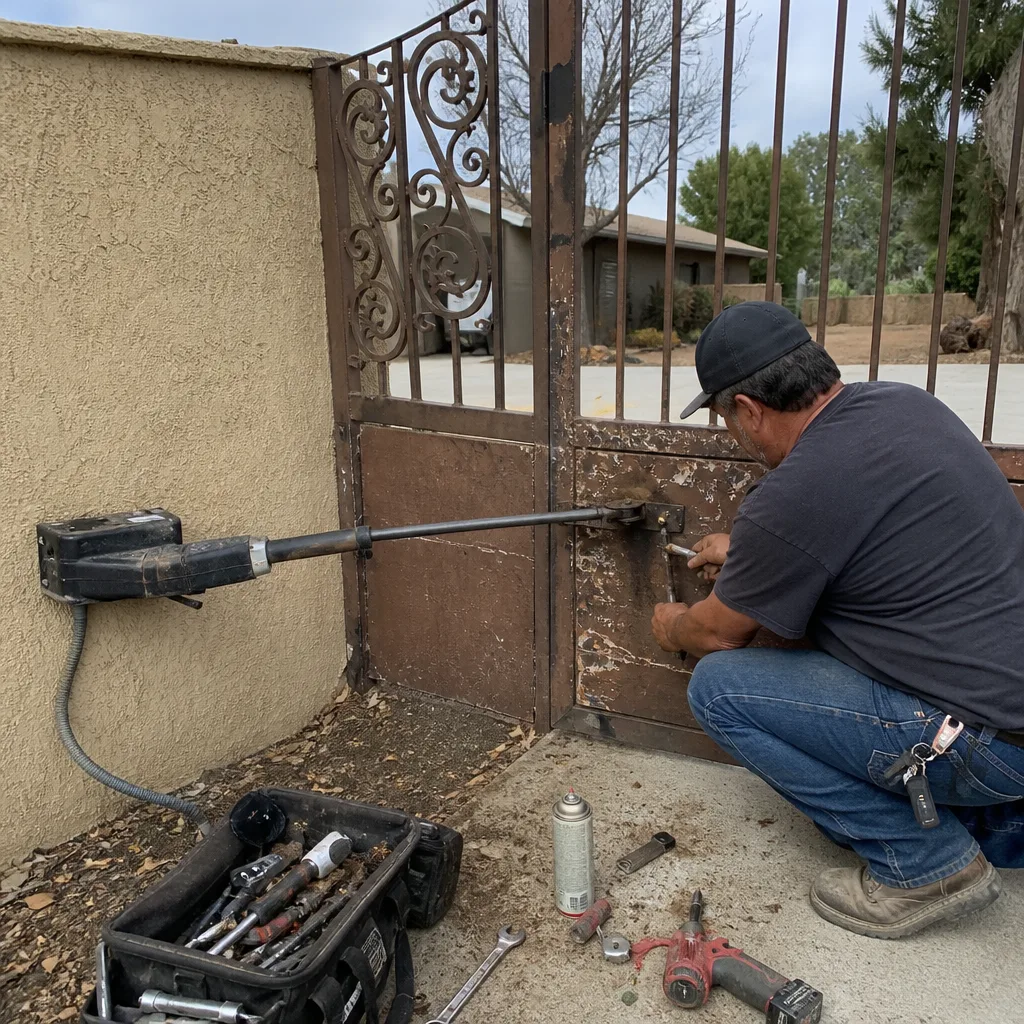 Before
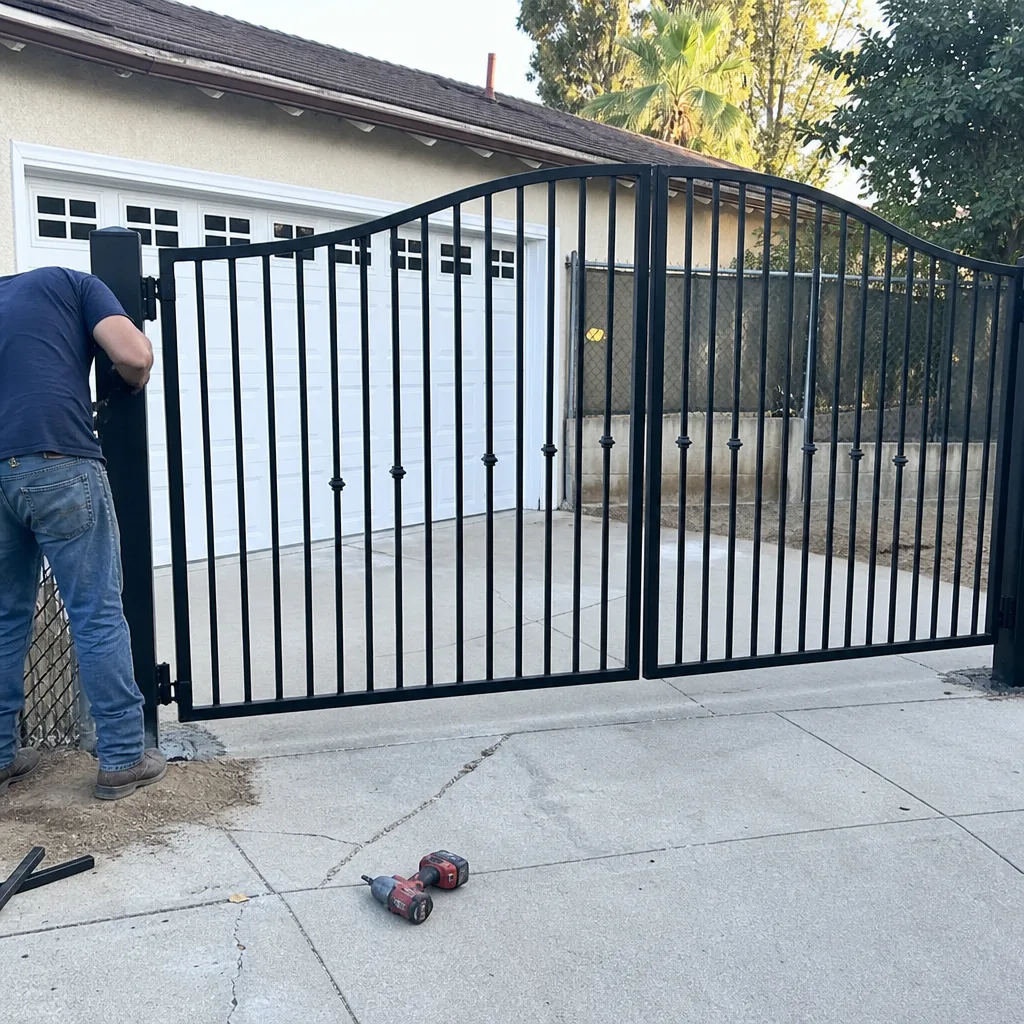 After
After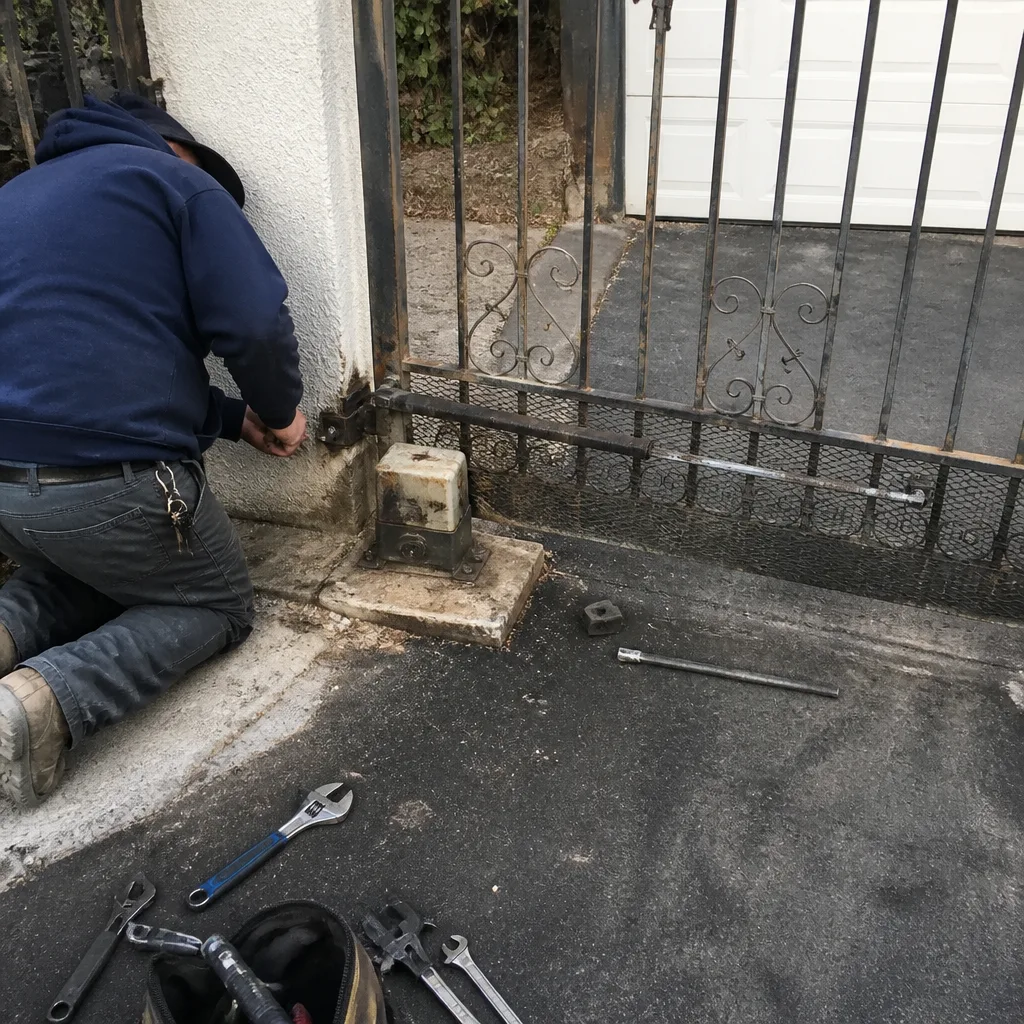 Before
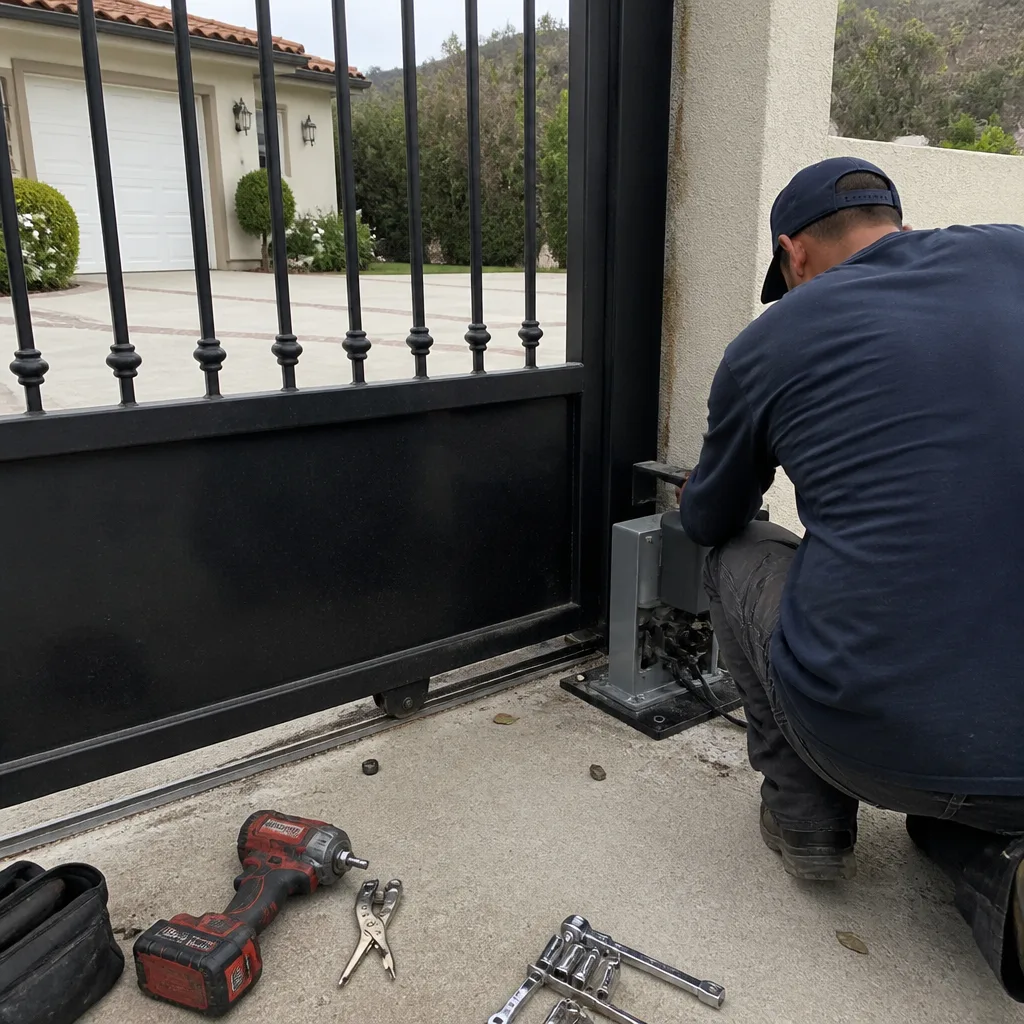 After
After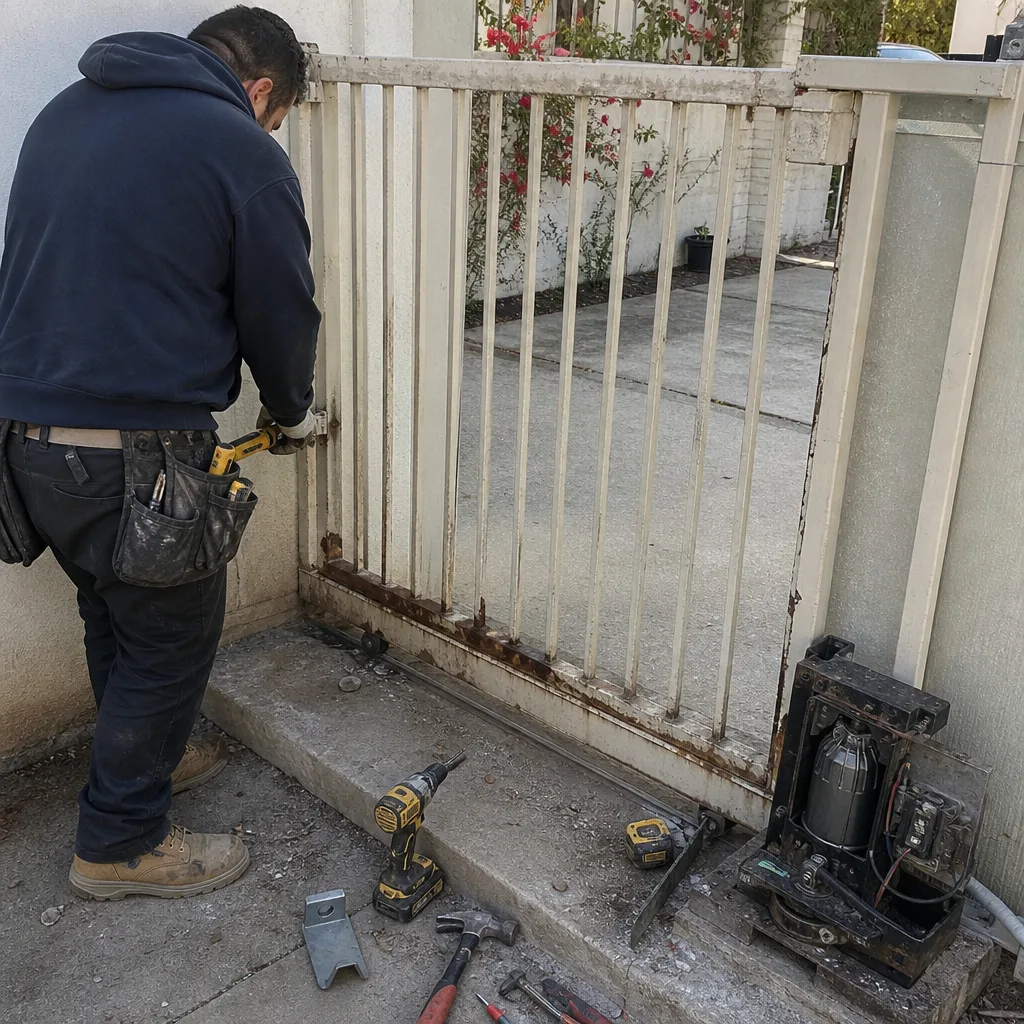 Before
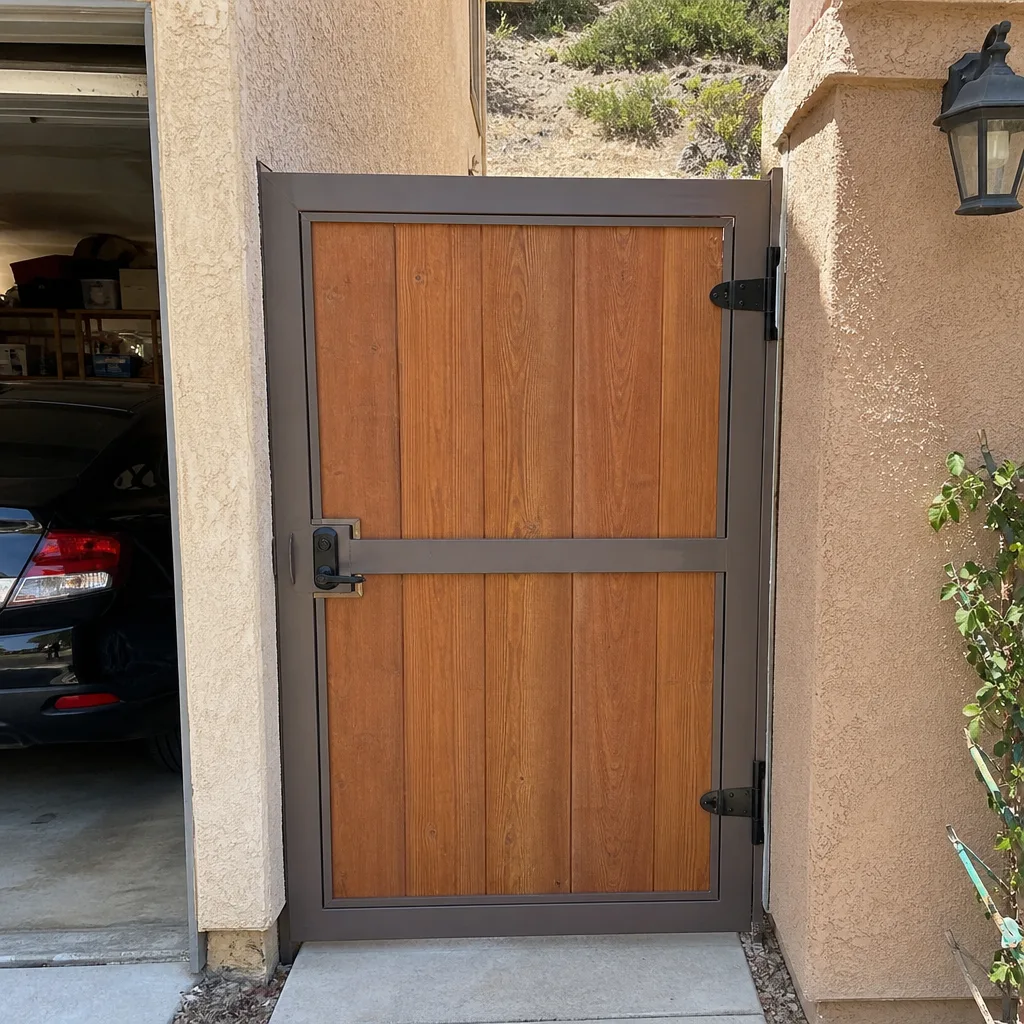 After
AfterWhen to Call a Professional
Call a professional when a gate is in Tier 1 (stop using it now), when any Tier 2 sign has persisted for more than two weeks without improvement, or when you’ve completed the five safe checks and the problem remains. Specifically: a gate that reverses with no obstruction, a grinding or clicking motor, a visible weld crack, a sagging gate, or a humming motor that won’t start. These are not DIY repairs. Gate operators contain high-tension components and high-voltage electrical connections that can cause serious injury. Warden Gate Repair Santa Clarita offers free estimates in Santa Clarita, and we service Viking, Ghost Controls, DoorKing, and Elite operators among others. Call (661) 425-9011 and describe what you’re seeing using the 5-step format above. You’ll get a real phone quote, and the technician who comes to your door will be named, photographed, and badge-verified before they ever set foot on your property. That’s our Threshold Standard on every visit.
Frequently Asked Questions
Gate repair in Santa Clarita typically costs $150 to $850 depending on the component. A capacitor replacement runs $150 to $250. Photo-eye realignment or replacement is $120 to $220. Control board replacement runs $350 to $800. Gear replacement inside the operator is $250 to $500. Full motor replacement on an electric gate operator is $600 to $1,200. These are real ranges for common repairs we perform in Santa Clarita, quoted upfront and put in writing before any work starts. Call (661) 425-9011 for an exact quote on your specific gate and operator, estimates are free.
For Tier 1 emergencies, yes, in most cases. Warden Gate Repair Santa Clarita maintains same-day availability for emergency gate repairs in Santa Clarita. Live phone coverage is available 24 hours a day, 7 days a week, so a real person answers when you call, even at 2 AM. For non-emergency repairs, we’ll schedule the next available appointment that fits your schedule. Call (661) 425-9011 and explain the problem, and we’ll tell you honestly whether it needs same-day attention.
A gate that hums but doesn’t move usually has a failing start capacitor in the operator. The capacitor provides the electrical jolt the motor needs to start turning. When it fails, the motor hums but can’t overcome inertia. This is a common repair on Ghost Controls and DoorKing operators in Santa Clarita, and it’s usually a sub-$250 fix. If the humming has been going on for more than a few days, the capacitor is likely ready to fail completely, and the next time you press the remote, nothing will happen. Call (661) 425-9011 and describe the hum; we’ll give you an honest assessment over the phone.
A gate that opens but won’t close is usually a safety sensor problem. The control board thinks something is in the way and refuses to close. The most common cause is a dirty photo-eye lens, which is a five-minute fix with a dry cloth. The second most common cause is misaligned photo-eyes, which requires minor adjustment. If cleaning and checking alignment doesn’t fix it, the sensor itself or the control board is failing. This exact problem is one of the most frequent calls we handle for Electric Gate Repair in Santa Clarita, and it’s almost always repairable without replacing the whole operator.
A quality gate opener installed in Santa Clarita lasts 7 to 12 years with proper maintenance, but Santa Clarita’s heat and dust shorten the lifespan of electronic components. Control boards and capacitors typically fail first, not the motor itself. If your opener is over 10 years old and starting to show intermittent issues, component replacement is often still worthwhile if the gate itself is solid. A new operator is cheaper than a new gate. For a free assessment of whether repair or replacement makes more sense, call (661) 425-9011. Written quote before any work starts, no exceptions.
Warden Gate Repair Santa Clarita is factory-trained and authorized for service on LiftMaster, FAAC, BFT, Linear, Viking, Ghost Controls, DoorKing, Elite, and Mighty Mule. That covers the vast majority of gate operators installed in Santa Clarita homes. If you’re not sure what brand you have, look at the operator box for a manufacturer name, or call (661) 425-9011 and describe what you see. We’ll help you identify it and tell you whether we service that brand. If you’re in the market for a new gate or opener, our Gate Repair in Santa Clarita team can also discuss replacement options.
The Bottom Line
Santa Clarita gates fail in predictable patterns, and those patterns announce themselves long before the gate stops working. A reversing gate is a safety system talking to you. A grinding motor is metal destroying itself. A stuttering gate is a control board losing its grip. The skill is in knowing which signs demand immediate action and which can wait. Use the three-tier system. Log the sounds. Photograph the rust. And when you call