
Last updated October 16, 2026
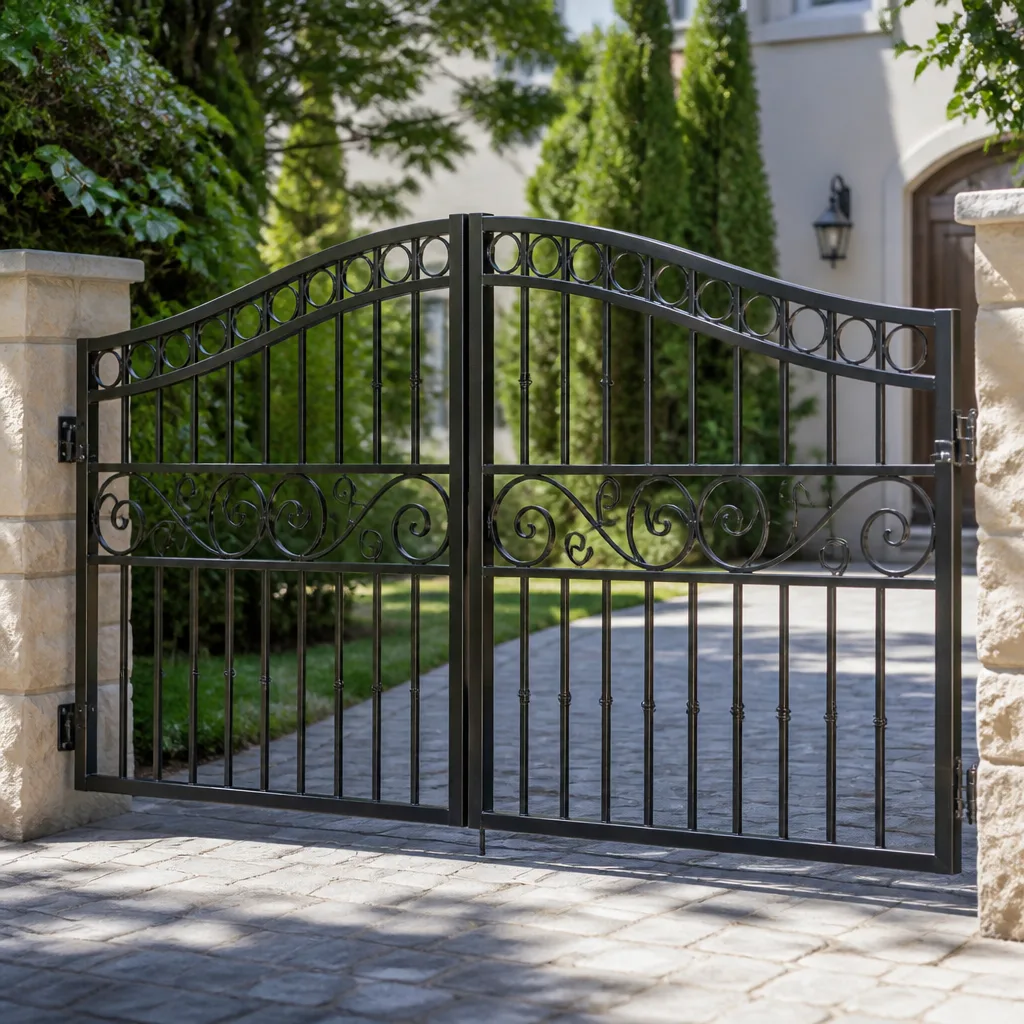 Wrought iron
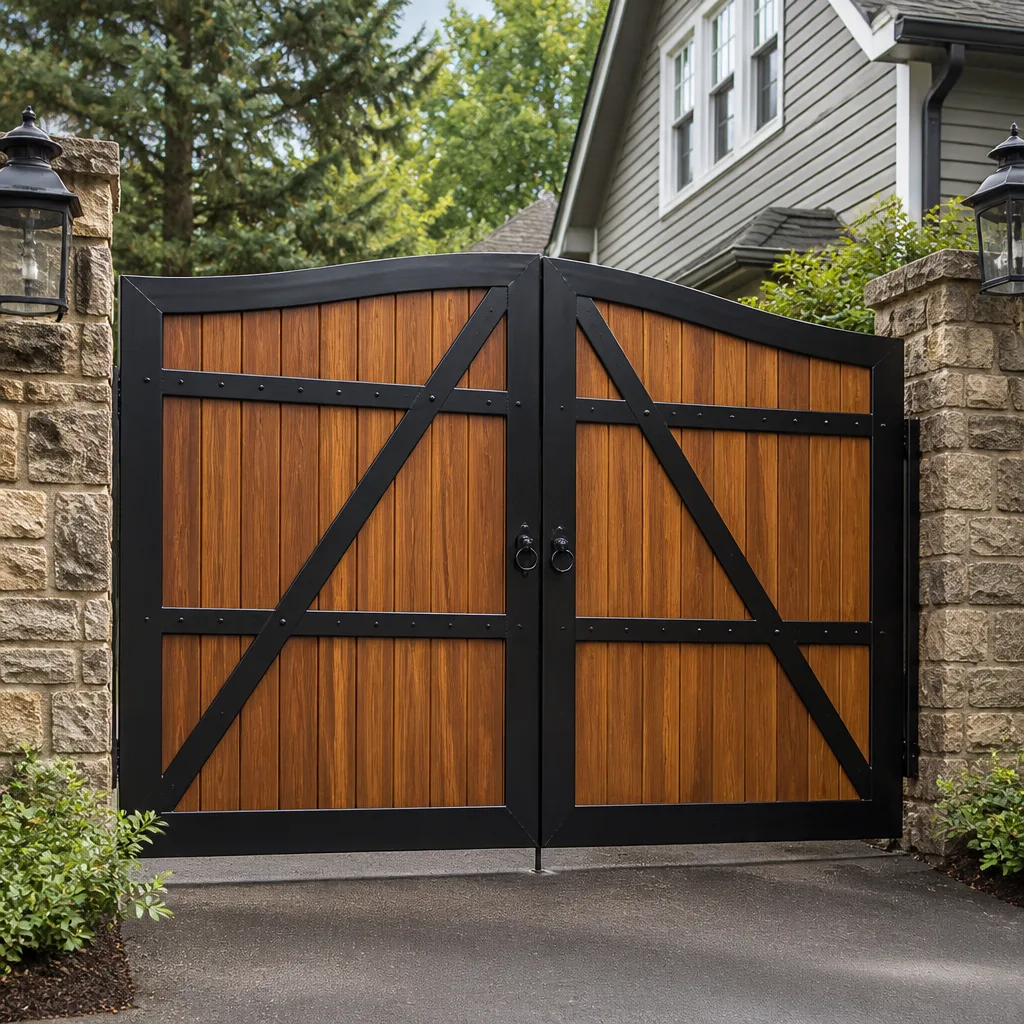 Wood & steel frame
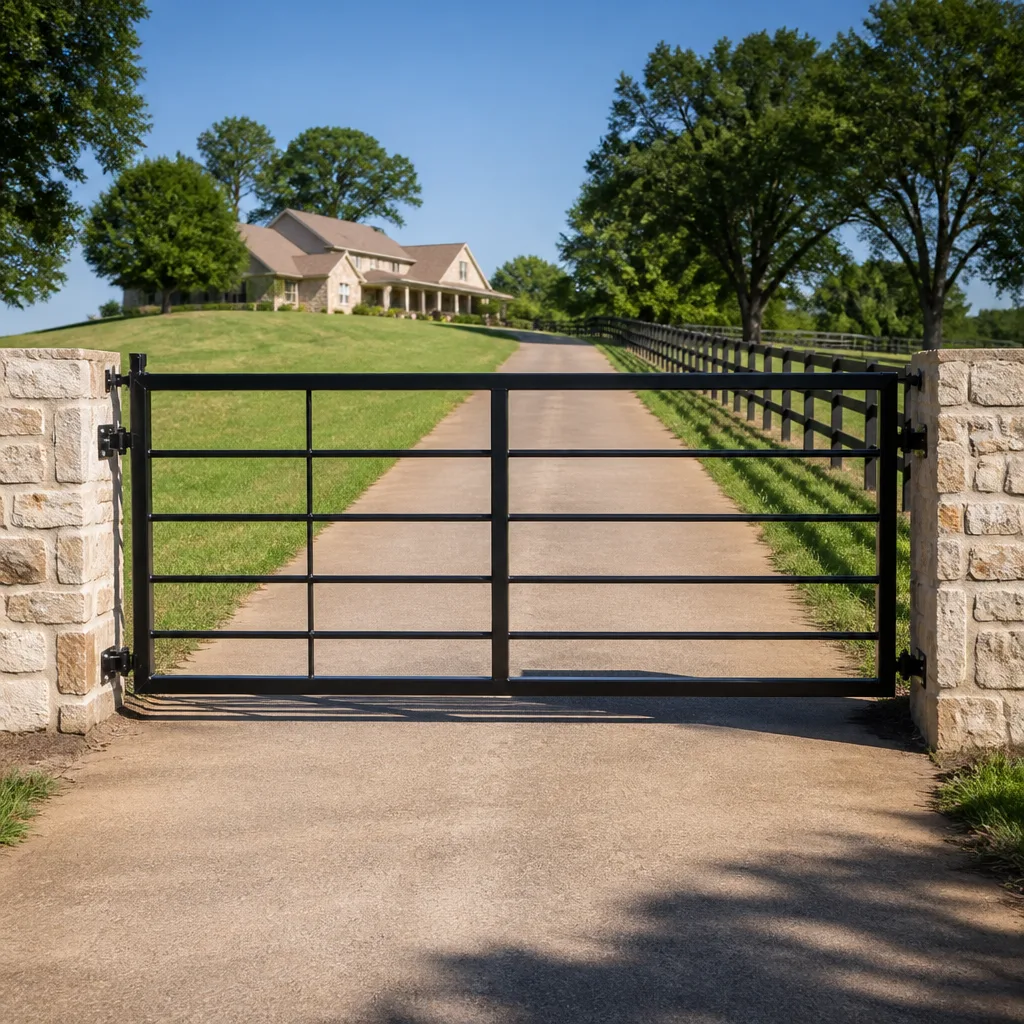 Farm & ranch
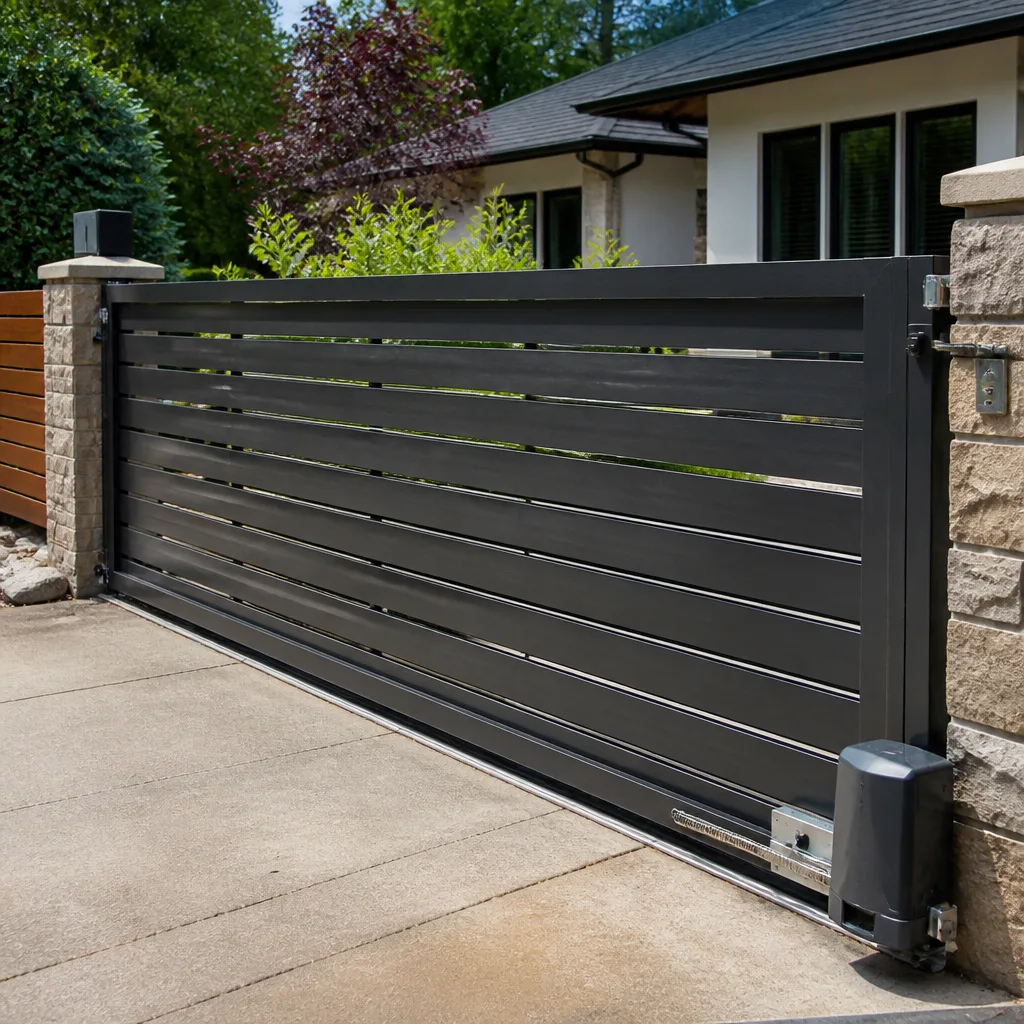 Sliding driveway gates
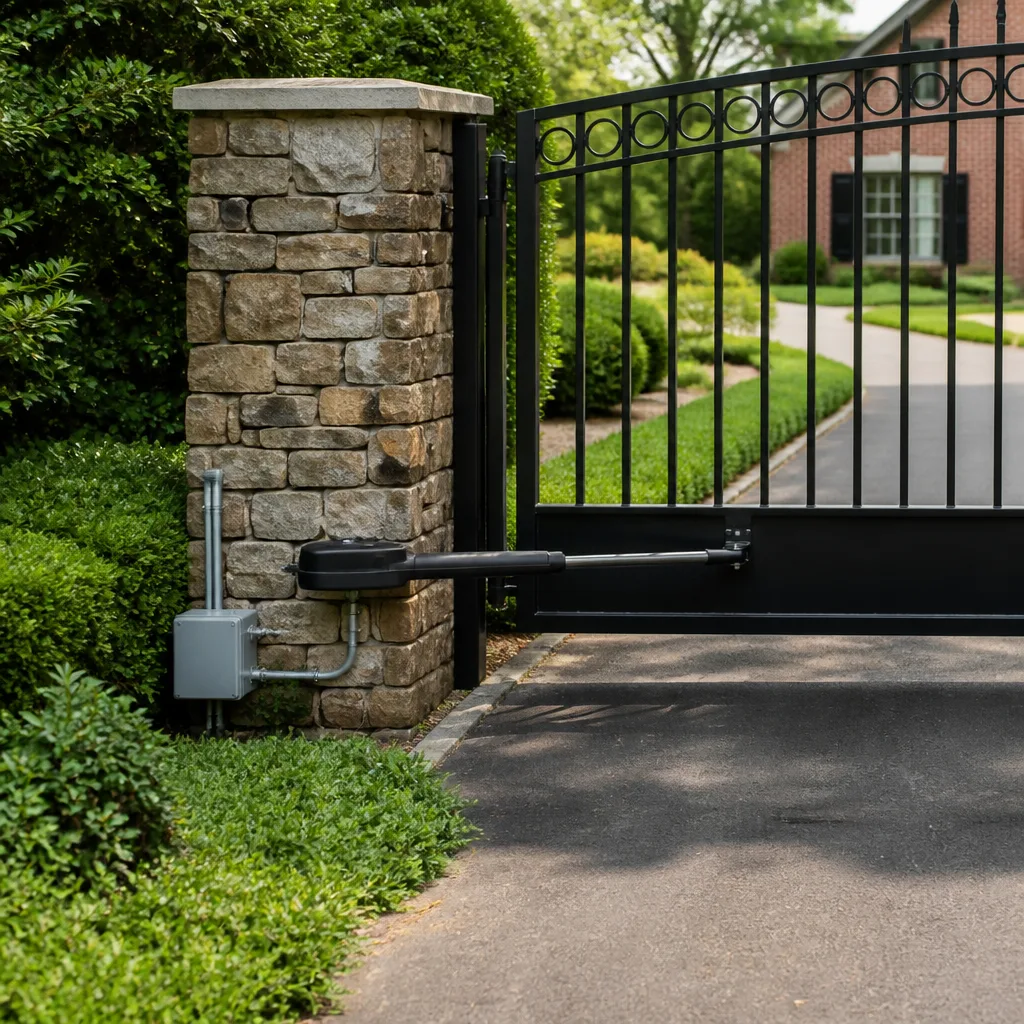 LiftMaster operators
Free on-site gate assessment - hinges, posts, and your LiftMaster or Nice gate operator checked before anything is quoted
The assessment is free and the quote is the invoice.
Get your free estimateGate Repair Permits, Codes & Inspections in CA: What You Need to Know
A homeowner in Stevenson Ranch swapped out a dead gate opener motor one Saturday morning, finished by lunch, and never thought about it again until two years later when he sold the house. During escrow, the buyer’s inspector flagged the unpermitted electrical work on the gate circuit. The deal nearly died on the table. The permit would have cost $180. The retroactive fix cost him a week of negotiations, a $900 city penalty, and about $3,000 off the final sale price. That is the reality of gate work in Santa Clarita: the repair itself is usually straightforward, but the paperwork around it can quietly become the most expensive part of the job. This guide explains exactly when California requires a permit for gate work, when it does not, what your HOA can actually control, and how to protect yourself if the work was already done. For more guides & resources, visit our blog.
When a gate repair or replacement happens in Santa Clarita, three separate authorities can each have a say: the California Building Code, the City of Santa Clarita’s municipal code, and your HOA’s Covenants, Conditions, and Restrictions. What complicates the picture further is that many neighborhoods here sit on the border of unincorporated Los Angeles County, which changes which building department reviews the work. Most homeowners only discover this when the inspector or the escrow officer is already in the room. The good news: once you understand the actual legal thresholds, most gate repairs need no permit at all, and the ones that do are manageable.
Quick Answer
Most gate repairs in California do not require a building permit: replacing a hinge, swapping a keypad, or replacing a failed capacitor on the gate’s circuit board is exempt work. A permit is generally required when the work crosses from repair into alteration, which in practical terms means replacing the gate operator or motor, adding a new electrical circuit, relocating a gate, or installing a new motorized gate where none existed. In Santa Clarita, the threshold is enforced through the city’s Building & Safety Division, and unpermitted gate electrical work is one of the most common escrow discoveries in resale disclosures.
Styles & brands we work with
Table of Contents
- Repair vs. Alteration: Where the California Building Code Draws the Line
- What Santa Clarita’s Building & Safety Division Actually Reviews
- HOA CC&Rs vs. City Permits: What Each Authority Controls
- The Real Cost of Unpermitted Gate Work in a California Home Sale
- How to Retroactively Permit Gate Work in Santa Clarita
- Common Mistakes to Avoid
- When to Call a Professional
- Frequently Asked Questions
Repair vs. Alteration: Where the California Building Code Draws the Line
The single most useful sentence in this entire guide is this: the California Building Code distinguishes between a repair and an alteration, and only alterations trigger the permit requirement. A repair restores something to its original condition using like-for-like parts. An alteration changes the equipment, the electrical load, the location, or the structure. That distinction is the whole game.
Here is where everyday gate work falls in practice, based on what we see across Santa Clarita:
- Replacing a hinge, wheel, or track roller: Repair. No permit.
- Swapping a LiftMaster gate opener circuit board for the same model: Repair. No permit.
- Replacing a keypad, photocell, or radio receiver: Repair. No permit.
- Replacing a failed gate motor with a different model or a higher horsepower unit: Alteration. Permit required in most jurisdictions, including Santa Clarita.
- Converting a manual swing gate to a motorized one: Alteration. Permit required, plus compliance with UL 325 safety standards for entrapment protection.
- Adding a dedicated electrical circuit to power the gate: Electrical permit required. This applies even if the gate itself is not changing.
- Moving the gate’s physical position or changing its swing direction: Alteration. Permit plus zoning review in some cases.
Why does swapping a gate motor cross that line? Because the California Electrical Code treats a gate operator as a listed appliance with a specific amp draw. When you change the motor to a different model, the wiring, breaker, and grounding requirements all need to be re-verified against the new unit’s nameplate data. A permit creates the paper trail that this verification happened. In our experience, roughly 7 out of 10 gate motor replacements we see in Santa Clarita involve a motor that differs from the original, which means the permit discussion applies to most of them, not the exception.
This is also the line where a good gate repair company will flag the permit question for you. A company that replaces a Viking or Ghost Controls motor without mentioning permits is not doing you a favor. It is shifting the risk onto your title package.
What Santa Clarita’s Building & Safety Division Actually Reviews
Inside Santa Clarita city limits, gate permits are processed through the city’s Building & Safety Division, which follows the California Building Standards Code (Title 24) with local amendments. The division reviews three things on a typical motorized gate application: the electrical scope, the entrapment safety devices, and the site plan.
On the electrical side, the plan reviewer wants to see that the gate operator is plugged into a dedicated GFCI-protected circuit, that the conduit run is specified, and that the operator is listed by a nationally recognized testing laboratory, like UL or ETL. That last point matters more than people expect: a gate motor ordered from a generic online seller that lacks a UL listing will be rejected on plan review. DoorKing, Linear, Viking, and Ghost Controls operators are all listed and generally clear review without comment, which is part of why we service those brands heavily in Santa Clarita.
On the safety side, the reviewer checks for two independent entrapment protection methods. For a sliding gate this typically means a monitored contact edge plus a photo eye. For a swing gate it means a photo eye plus a force-sensing motor that reverses on contact. UL 325 is the governing standard, and the city treats it as non-negotiable. This is one area where a gate that has worked fine for ten years in a Stevenson Ranch backyard can still fail a plan review because the original installation predates the current entrapment standard.
On the site plan side, the reviewer confirms setback distances and swing path. A gate that swings outward over a city sidewalk triggers a separate zoning review, and in some older Santa Clarita neighborhoods – think the hillside lots in Canyon Country – the original lot was platted before current setback rules, which means the gate may require a variance. That variance process adds weeks, not days.
For properties outside the city limits but within the Santa Clarita Valley, including parts of Castaic, Val Verde, and Agua Dulce, the same gate work falls under the Los Angeles County Department of Building and Safety. The code requirements are nearly identical, but the office, the forms, and the fee schedule are entirely different. If you are not sure which jurisdiction you are in, the property tax bill or the utility bill will state it explicitly. It is worth checking before you file.
HOA CC&Rs vs. City Permits: What Each Authority Controls
One of the most persistent confusions in Santa Clarita gate work is the belief that an HOA approval is the same as a building permit, or that one replaces the other. They are separate authorities with separate rulebooks, and they both bind you independently.
Here is the clean division of authority:
- City Building & Safety controls life-safety and code compliance: electrical wiring, entrapment protection, structural anchoring, setback distances, and the permit record itself.
- The HOA controls aesthetics and architectural character: gate height, material, color, style, and visibility from the street.
The overlap happens when the project touches both. A new metal driveway gate in a Santa Clarita HOA community may need an architectural review committee approval for its appearance and a city permit for its electrical and structural scope. The HOA cannot waive a building permit. The city will not review your gate’s color against the community’s palette. You need both, and they run on different timelines. Some HOAs here take 30 to 45 days to review a gate application, while a city permit for simple gate electrical work can clear in 7 to 10 days.
Another nuance: some Santa Clarita HOAs have rules that are stricter than city code. For example, an HOA may prohibit motorized gates entirely in smaller front-yard communities because of the noise and the conflict with narrow shared driveways. In that case, the city may be perfectly happy to issue a permit for a compliant gate, but the HOA restriction takes precedence over your property rights under the CC&Rs. Reading the CC&R document before buying a gate system is the cheapest mistake you will ever avoid.
The Real Cost of Unpermitted Gate Work in a California Home Sale
The Stevenson Ranch story at the top of this guide is not an outlier. In California, the standard residential purchase agreement requires the seller to disclose all improvements made without a permit, including gate work. Sellers frequently check “no” without realizing that a gate motor replacement from three years ago qualifies. When the buyer’s home inspector traces the gate circuit and finds it absent from the county permit database, the disclosure becomes a problem even when the seller had no intent to hide anything.
What a Title 24 compliance inspector actually looks for on gate electrical work is specific. They check that the circuit is GFCI-protected, that the wire gauge matches the operator’s amp draw, that the conduit is properly supported and sealed, that the disconnect switch is accessible, and that the entrapment devices are operational. Any one of these deficiencies can make the inspector’s report red-flag the entire gate system. At that point the typical resolution is one of three outcomes: a price reduction, a request for retroactive permits before close, or a failed escrow.
Retroactive permitting carries a double fee in most jurisdictions, including Santa Clarita: the standard permit fee plus a penalty, often two to three times the original amount. The city may also require opening up the conduit run or the operator housing for inspection, which adds labor. In the worst but not rare case, the city determines that the existing work cannot be brought into compliance without substantial rework, and the seller is now financing repairs on a property they are trying to leave.
The lesson is simple: the $180 permit applied for at the time of the work is insurance against a $3,000 to $8,000 escrow problem years later.
How to Retroactively Permit Gate Work in Santa Clarita
If you already have unpermitted gate work, the fix is not always a tear-out. Retroactive permitting is genuinely possible in many cases, and the process is more practical than most homeowners expect. Here is the exact sequence we have walked many Santa Clarita homeowners through:
- Determine the work’s scope. Was it a motor replacement, a full gate replacement, or an electrical circuit addition? The scope determines the review path. A like-for-like motor swap is the easiest to process retrospectively.
- Gather documentation. Find the operator’s manual, the motor’s nameplate photo, and any purchase receipts. If you do not have them, a technician can often identify the make and model from the unit itself. Linear, DoorKing, and Viking nameplates are usually on the operator housing or the cover panel.
- Schedule a preliminary review. Contact Santa Clarita Building & Safety and explain that you need to bring existing gate work into the permit record. Ask for a plan review of the as-built condition rather than a new-work plan.
- Have a licensed electrician or qualified gate technician inspect the circuit. The inspector will ultimately require verification that the circuit is GFCI-protected, properly grounded, and sized for the operator. If it is not, that correction is done before the final inspection.
- File the permit with a clear scope description. The permit is filed as an “as-built” or “retroactive” permit. Expect the double-fee structure.
- Pass the final inspection. The city will inspect the operator, the entrapment devices, and the electrical connection. If every element is compliant, the work is recorded as permitted.
When retroactive permitting is not possible, it is usually for one of three reasons: the operator lacks a UL listing and cannot be legally connected at all, the gate swings over a public right-of-way and violates current setbacks, or the electrical work is so deficient that the inspector will not sign off without a full rewire. In those cases, the honest answer is replacement rather than retrofitting.
Common Mistakes to Avoid
- Assuming a “handheld remote swap” counts as repair and never checking the motor. The remote is never the permit issue. The motor is. If the motor changes, the permit question is live.
- Confusing HOA approval with a building permit. An HOA letter does not satisfy the city. Sellers learn this during escrow when the buyer’s inspector runs the permit search.
- Skipping the GFCI check on an existing gate circuit. Many older Santa Clarita homes have gate circuits that were installed before GFCI protection was required for outdoor receptacles. The gate works fine, but the circuit fails current code and will fail any inspection.
- Ordering a gate motor online without checking for a UL or ETL listing. If the listing is missing, the plan reviewer will reject it, and returns on electrical equipment are rarely straightforward.
- Ignoring the entrapment devices when replacing only the motor. A new motor connected to old, non-compliant safety edges is still a code violation under UL 325. The inspector sees the whole system, not just the new motor.
- Filing the permit in the wrong jurisdiction. Properties in the Santa Clarita Valley but outside city limits answer to LA County, not the city. Filing with the wrong office wastes the fee and the clock.
- Paying for a full gate replacement without a written scope-of-work that includes the electrical. If the contractor’s invoice says only “gate and motor,” the permit record will not match the actual work, and the next buyer’s inspector will notice the mismatch.
When to Call a Professional
Any time the work involves the gate motor, the electrical circuit, or the entrapment safety devices, a professional should be involved. For guidance on choosing the right professional, see our step-by-step guide. These are not difficult tasks for a trained technician, but they cross the line where a missed detail becomes an escrow problem or a safety liability. If your gate operator is more than ten years old, if you are changing from a swing to a slide configuration, or if you have a buyer’s inspector asking about the permit record, call someone who does this work specifically. Warden Gate Repair Santa Clarita offers free estimates in Santa Clarita – call (661) 425-9011.
Frequently Asked Questions
No, not for a true repair. Replacing a broken hinge, a worn roller, a keypad, a photocell, or a circuit board with a like-for-like part is exempt from the permit requirement. The permit obligation attaches when the work changes the motor, the electrical circuit, the gate’s location, or the gate’s structure.
Gate permit fees in Santa Clarita vary by project scope, but a straightforward motorized gate electrical and structural permit typically runs between $150 and $400. Retrofitting a permit after the fact doubles that range because of the penalty structure. Call (661) 425-9011 and we can give you a realistic number for your specific project during a free estimate.
In practice, if you are replacing the motor with the exact same model and the circuit is unchanged, most jurisdictions treat it as a repair. If the motor’s make, model, or horsepower differs, Santa Clarita Building & Safety will generally require an alteration permit, because the new operator must be re-verified against the existing wiring and breaker.
The inspector checks four things: the electrical circuit protection (GFCI and correct breaker sizing), the operator’s UL or ETL listing, the grounding and conduit work, and the UL 325 entrapment protection devices. If any of these do not meet current code, the inspection fails regardless of how well the gate itself operates.
Yes, and the two authorities do not overlap. The HOA governs appearance, height, material, and style under the CC&Rs. The city governs electrical and structural safety under the building code. A city permit does not override an HOA restriction, and an HOA approval does not satisfy the city’s permit record.
In many cases, yes. The work must be brought into current code compliance, documented as an as-built condition, and inspected. When the existing work cannot be brought into compliance without substantial rework – for example, if the operator lacks a UL listing or the gate violates current setbacks – retroactive permitting is not possible and replacement is the realistic path. Call (661) 425-9011 for an honest read on your situation; our estimates are free.
The Bottom Line
California gate permits live on a single line: does the work restore what was there, or does it change what was there? Repairs stay on the permit-free side. Motor replacements, circuit additions, and gate relocations cross over, bringing Santa Clarita Building & Safety, LA County, and often your HOA into the process. The cost of a permit is measured in hundreds of dollars. The cost of skipping one is measured in the price of a house sale that does not close on time, or at all. Know the line, document the work, and when the motor question comes up, call a specialist who will give you a written answer instead of a vague one. For warning signs that your gate needs professional attention, see our Santa Clarita homeowner’s reference guide.
Written by Cole Rafferty, Owner at Warden Gate Repair Santa Clarita, serving Santa Clarita since 2008.
See the difference
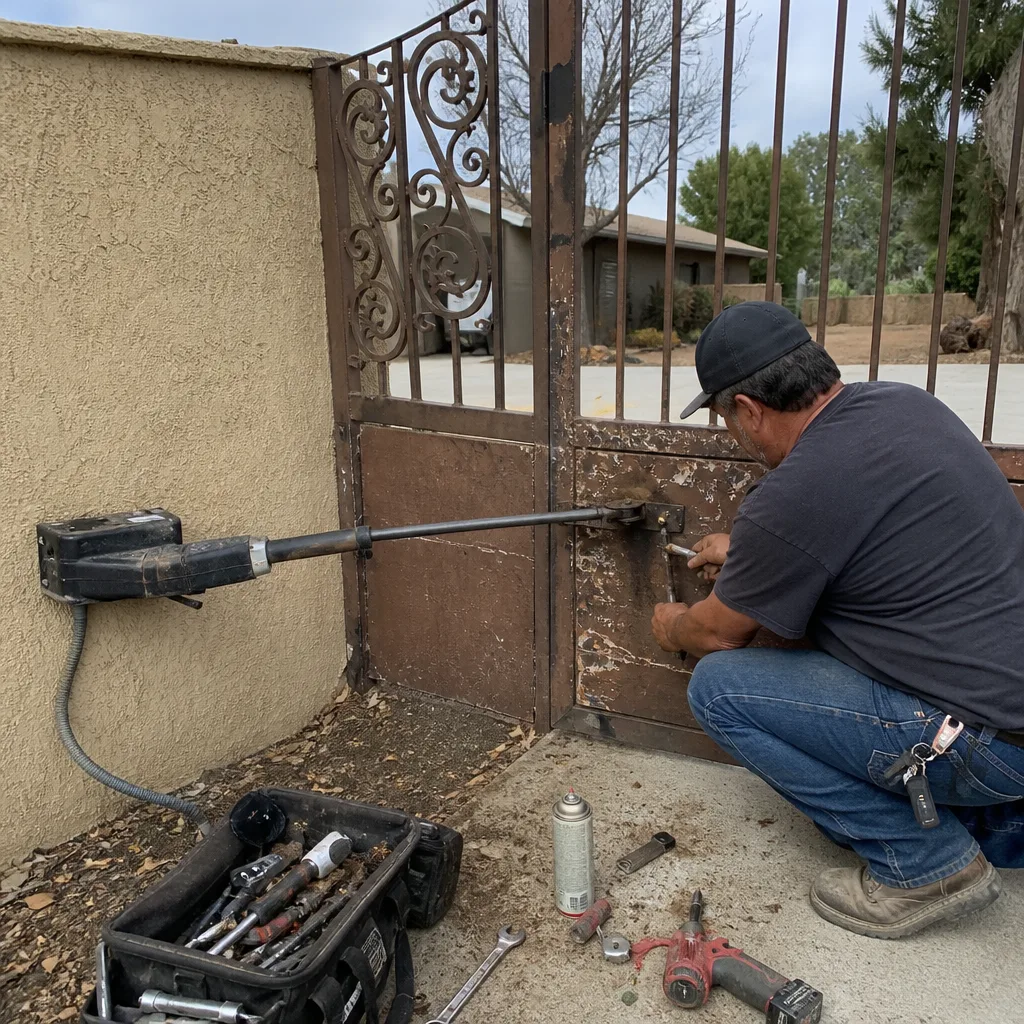 Before
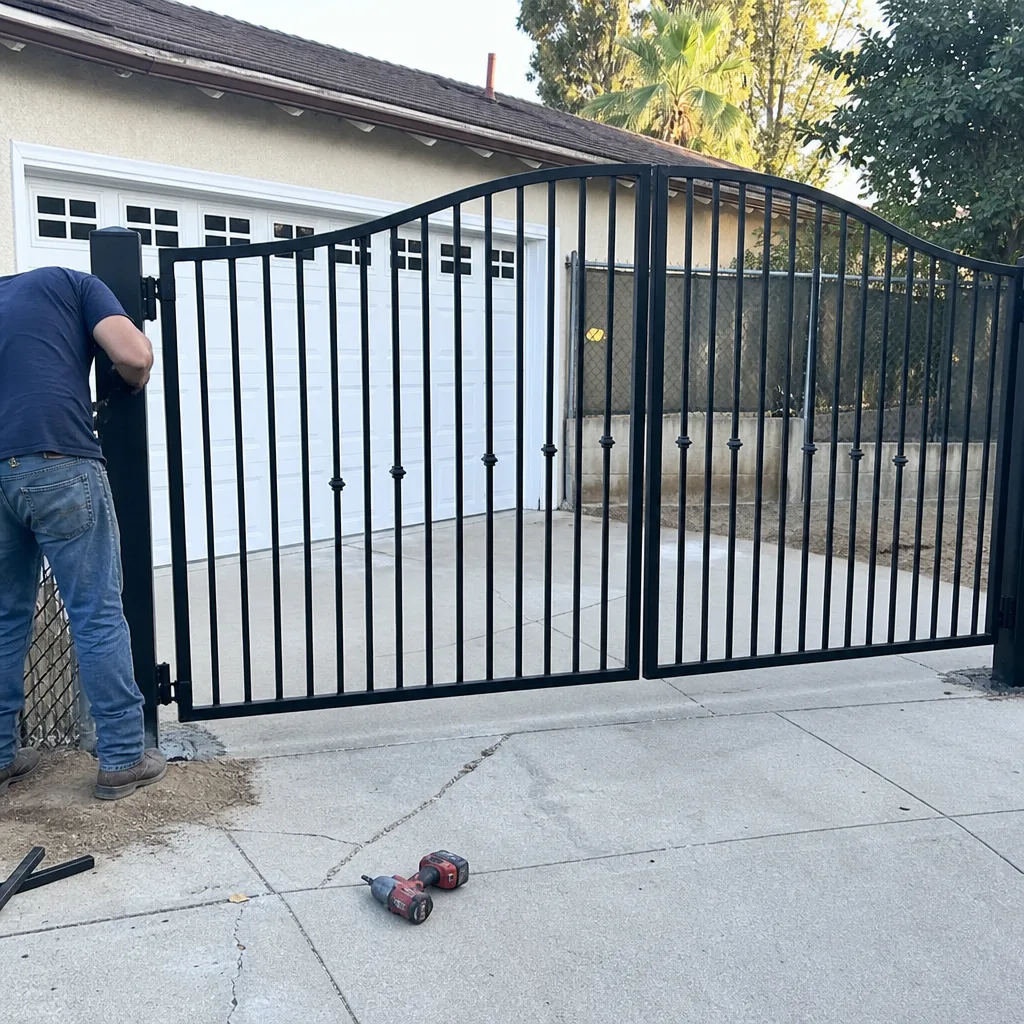 After
After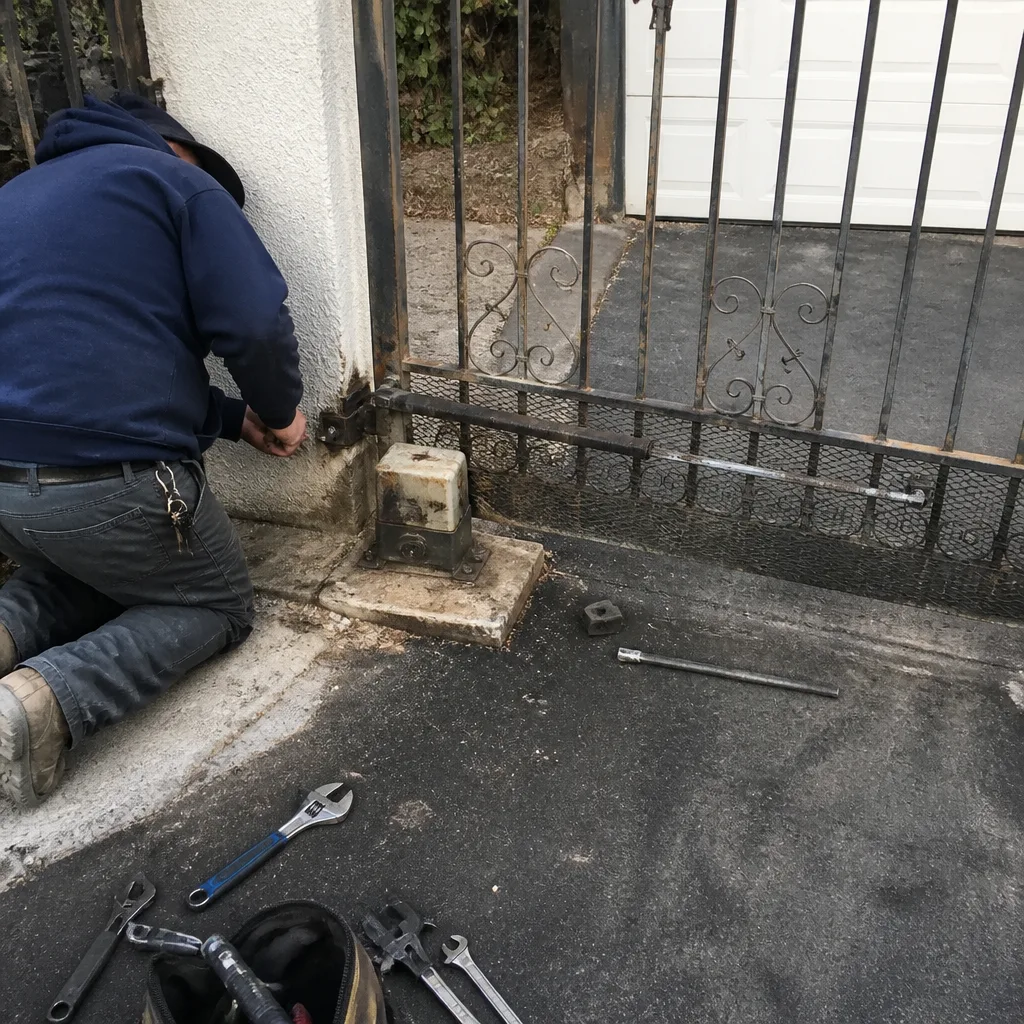 Before
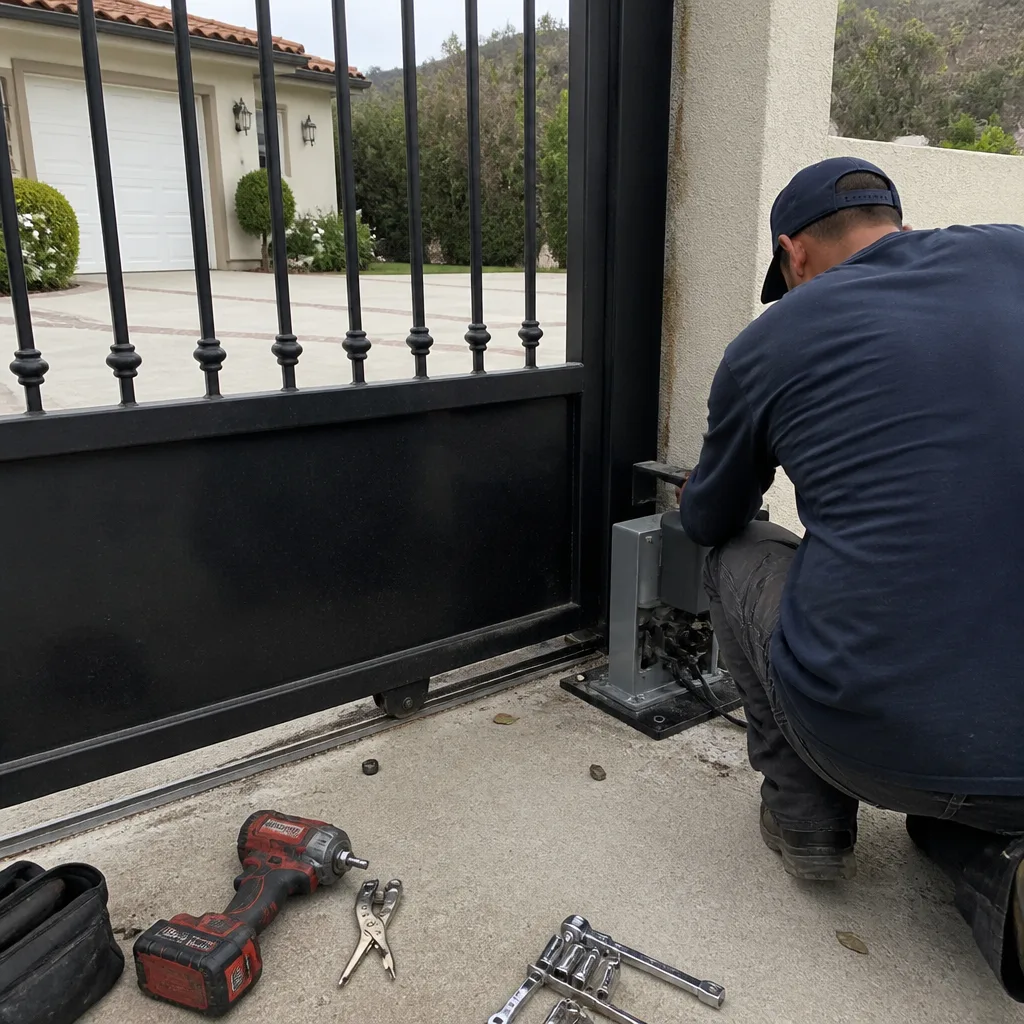 After
After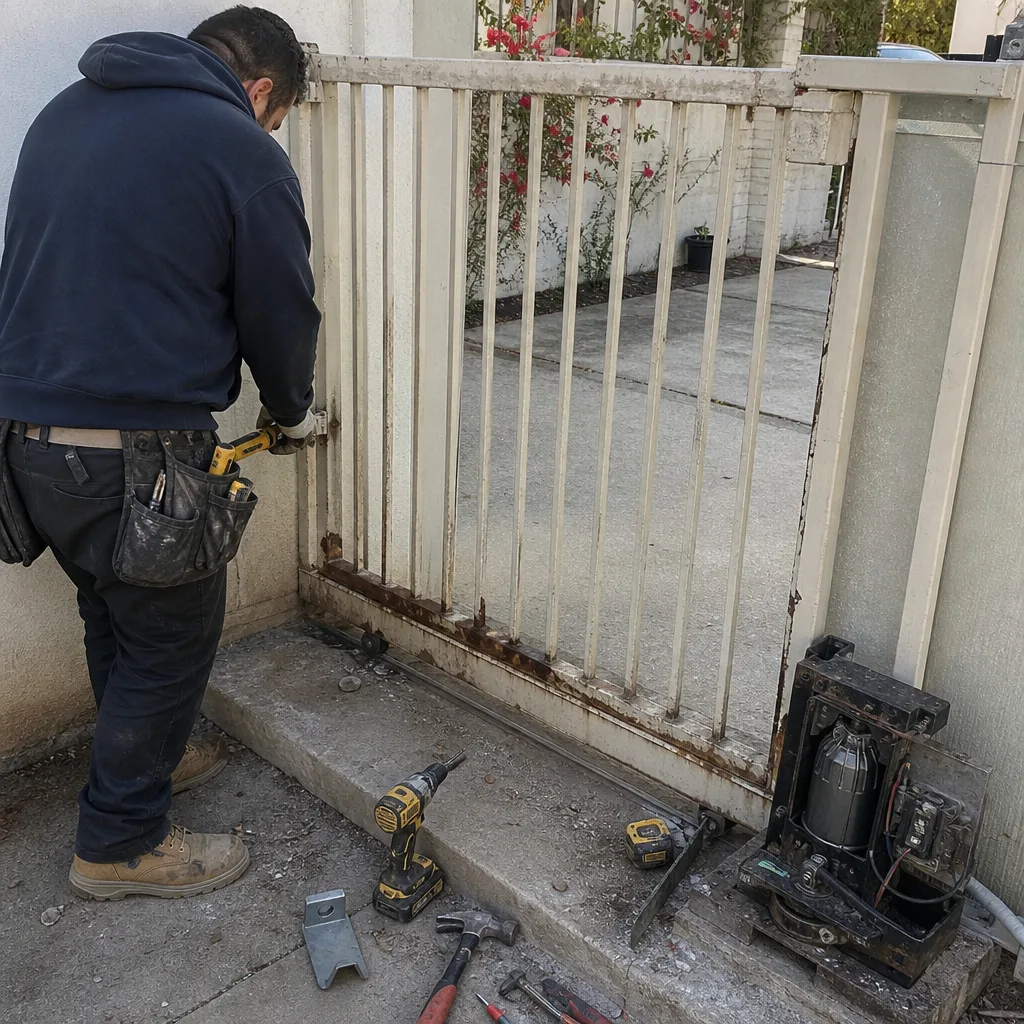 Before
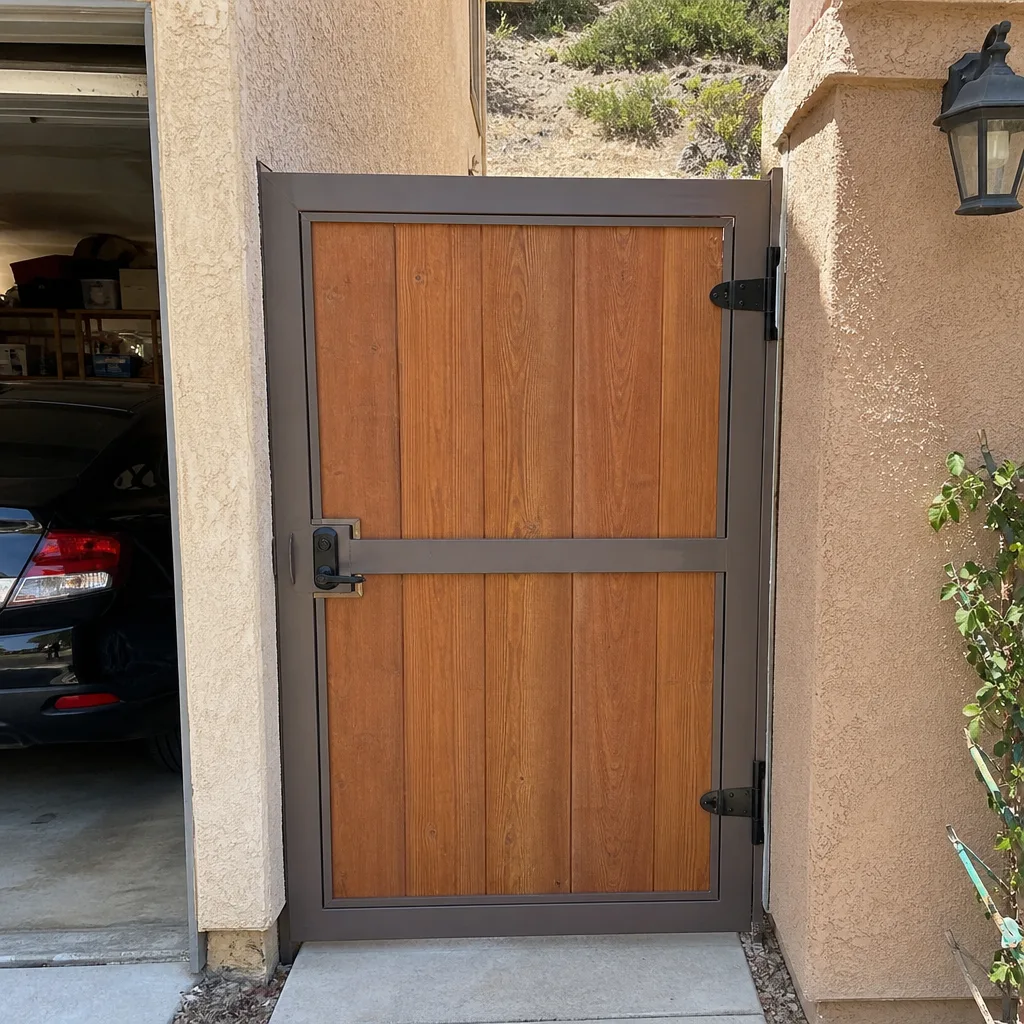 After
After